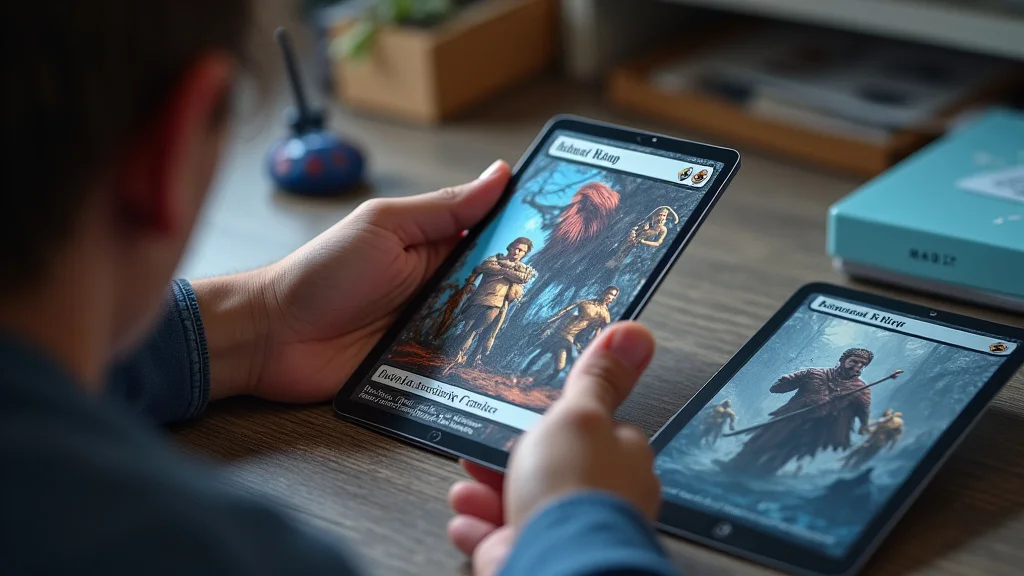
Picture this: you’re at your local game store, ready for a Magic: The Gathering tournament. You’ve spent hours building your dream deck, but suddenly, you realize you’re missing a key card – a rare, expensive, or maybe just out of print. You have two options, either miss the tourney or find a substitute. The alternative? Learn about printing proxies MTG! This guide will explain everything, from the legalities to the best techniques for creating your own proxies, so you can play without breaking the bank. You’ll gain valuable knowledge about the world of proxy cards and learn the best practices, improving your gameplay experience. You’ll also learn the differences between the card versions to gain knowledge about the game, improving your playtime.
Key Takeaways
- You will discover what printing proxies MTG is and why it’s a popular option for players.
- You’ll learn about the legalities surrounding proxy cards and what’s allowed.
- You’ll get a detailed guide on creating high-quality proxies.
- You’ll explore the best materials and tools to produce proxies.
- You’ll discover a variety of websites for generating proxy card images.
- You’ll understand the ethical considerations associated with proxy use.
What Are Printing Proxies for MTG?
In the vast world of Magic: The Gathering, acquiring every single card can be costly. Some cards are extremely rare, valuable, or even out of print, making them hard to find and expensive to purchase. That’s where printing proxies MTG come into play. A proxy is essentially a substitute card, a stand-in for the actual card. They allow players to test out decks, play with friends, or simply enjoy the game without the financial barrier of acquiring genuine cards. Proxies are often used to replicate expensive cards, so you can experiment with a deck before investing the funds.
The beauty of proxies lies in their accessibility. Anyone can create them, and the process can range from simple print-outs to more elaborate, professionally produced replicas. While they’re not official tournament legal (in most cases), they serve as fantastic tools for casual play, playtesting, and enjoying the MTG experience without limitations. When creating a proxy, the goal is often to make the proxy look as close to a real card as possible, so the visual experience is not affected.
Purpose of Proxies in Magic: The Gathering
Proxies serve multiple purposes within the MTG community. The primary motivation is usually financial; high-value cards can be extremely expensive, making decks unattainable for many players. Proxies allow players to build and enjoy these decks without the large upfront cost. This opens up the game to a wider audience, regardless of their financial status. They also allow players to test out different deck combinations before investing in the genuine cards.
- Cost Savings: The most prominent reason is to avoid the high cost of expensive cards.
- Playtesting: Proxies are ideal for testing decks before making actual card purchases.
- Accessibility: They make the game more inclusive by removing the financial barriers.
- Experimentation: Players can experiment with various deck strategies without financial risk.
- Availability: Proxies provide access to cards that are out of print or hard to find.
Moreover, proxies are useful when playing with friends or in casual settings where the strict rules of official tournaments don’t apply. Many players create proxies for personal use, to make a whole set of alters, or to fill in missing cards in their collection. Proxies are a practical way to enjoy the game’s full breadth without financial constraints.
Legalities and Ethics of Proxy Usage
Understanding the legal and ethical considerations of printing proxies MTG is key to using them responsibly. The legality depends on the setting: casual play with friends or local game store events versus official tournaments run by Wizards of the Coast. In casual settings, proxies are usually welcomed, especially if players are transparent about their use. When it comes to organized tournaments, however, the rules are stricter. Wizards of the Coast generally prohibits proxies in sanctioned events, although some exceptions exist.
Ethically, the use of proxies should be transparent. Always inform your opponents if you’re using proxies, especially in casual play. Misrepresenting proxies as real cards, especially for sale or trade, is unethical and can be considered a form of fraud. The focus should be on enhancing the game experience, not deceiving or exploiting other players. The majority of players and game stores respect proxies when utilized with clear and transparent communication.
It’s important to remember that using proxies is about enjoying the game, not about circumventing the system. Respecting the game’s rules and communicating with your opponents are important factors. Players will often set their own rules when they are playing friendly games with each other. For example, some may allow proxies, while others may not.
Creating Your Own MTG Proxies
Creating your own MTG proxies can be a fun and rewarding process. The quality of your proxies will depend on the materials you use and the care you put into the project. Many people want to find out how to recreate the feel of real cards. Here are some options for creating proxies, from the simplest to more advanced methods. The goal is to provide a stand-in card for your MTG games that looks and feels as authentic as possible.
Methods for Printing Proxies
Several methods exist for creating proxies, each with its own complexity level. The simplest method is to print the card image onto paper and place it inside a card sleeve with a basic card as backing. This is a very quick and cheap method. For higher quality, consider more advanced options like using adhesive labels or printing on card stock. The best method depends on your desired quality and the time you’re willing to invest.
- Simple Print-and-Play: This involves printing the card image on standard paper and placing it in a sleeve with a basic Magic card behind it for support.
- Print on Card Stock: Printing directly on card stock produces a more realistic feel and is sturdier than regular paper.
- Adhesive Labels: Print card images on adhesive labels and apply them to old Magic cards or blank cardstock for a good feel.
- Professional Printing Services: Using a printing service offers the best quality but also the highest cost, often mimicking real cards perfectly.
Each method offers a trade-off between quality, cost, and effort. The basic print-and-play is good for a quick test, while using professional services will provide you with proxies that are close to the quality of an official MTG card. Consider what you want from your proxies.
Materials and Tools Needed
The materials you’ll need vary based on the method you choose. For basic print-and-play, you’ll need a printer, paper, sleeves, and basic Magic cards. If you want to take it up a notch, you’ll need card stock, adhesive labels, scissors or a paper cutter, and possibly a laminator. The quality of the materials greatly affects the final result, so you may want to invest in high-quality items.
- Printer: Any standard printer will work for the basic method.
- Paper/Card Stock: Use card stock for a more authentic feel.
- Adhesive Labels: These are helpful for applying printed images to old cards.
- Scissors/Paper Cutter: For trimming your proxies to the correct size.
- Sleeves: To protect your proxies and add support.
- Basic Magic Cards: To provide the right feel for simple print and play.
The investment in higher-quality materials can make a significant difference. Consider the materials for their durability, the color reproduction, and the overall look of the final product. Even with the best materials, the quality of the image is going to matter a great deal.
Image Acquisition and Preparation
Getting high-quality images is critical for the success of your proxies. Many websites allow you to find card images. Once you have the images, you’ll need to prepare them for printing. This usually involves resizing the images to the correct card dimensions (63mm x 88mm or 2.5 inches x 3.5 inches), ensuring a high resolution for a clear print. Many people like to increase the contrast for the card image. You will also have to format the images to fit a printing template.
- Image Sources: Many websites provide high-quality card images for proxy creation.
- Image Editing: Resize and adjust image settings for clarity.
- Printing Templates: Use templates to arrange multiple images on a page for efficient printing.
- Color Calibration: Ensure accurate color reproduction by calibrating your printer or using color profiles.
- Resolution: Always use images with the highest possible resolution for clear and detailed proxies.
Paying attention to these details will make a big difference in the final product. Consider the resolution, color, and size when preparing your images. Take your time to get each step right.
Advanced Techniques for Printing Proxies MTG
Once you’ve mastered the basics, you can move onto more advanced techniques to make your proxies look even more authentic. These methods involve more sophisticated tools and a greater commitment, but the results can be fantastic. You may want to consider ways to recreate the look of the cards from the real game.
Printing on Card Stock
Printing directly on card stock gives the proxies a much more realistic feel than printing on standard paper. You’ll need card stock of the appropriate thickness and finish, similar to the feel of actual Magic cards. Some people also like to use a specific type of card stock.
- Card Stock Selection: Choose card stock that is similar in thickness and finish to actual Magic cards.
- Printer Settings: Adjust printer settings to accommodate the card stock thickness.
- Cutting: Use a paper cutter to make clean, accurate cuts.
- Alignment: Careful alignment during printing is essential to avoid crooked prints.
- Testing: It’s always a good idea to test print a single card before doing a whole set.
This method significantly improves the feel of your proxies and reduces the risk of the proxy being obvious. Consider printing several cards to get the method correct.
Using Adhesive Labels
Applying printed adhesive labels to old Magic cards or blank card stock is another advanced technique. This offers the benefits of card stock without the need for a special printer. This process will add weight, making the card feel real. Make sure to use high-quality labels for the best results.
- Label Selection: Choose high-quality, matte-finish labels.
- Alignment: Precise alignment of the label is vital.
- Application: Ensure a smooth, bubble-free application.
- Card Preparation: Clean and prepare the card before applying the label.
- Trimming: Carefully trim any excess label material around the edges.
The label quality and application accuracy will have a big impact on the final product. Using an old Magic card will help to maintain the integrity of your proxy. Even the best labels can be challenging, so make sure to get them just right.
Finishing Touches and Enhancements
To improve the look of the proxies, consider adding finishing touches. This could include adding a layer of protective coating, using specialized inks, or even aging the cards. These additions can make your proxies look nearly indistinguishable from actual Magic cards.
- Protective Coating: Use a clear sealant to protect the print from wear and tear.
- Specialized Inks: Consider using fade-resistant inks for a longer-lasting image.
- Aging Techniques: Carefully simulate wear and tear to match the appearance of real cards.
- Border Matching: Pay attention to the border color and design to match real cards.
- Layering Techniques: Layering multiple prints to achieve a perfect feel.
Even the finest details contribute to the overall impression, so consider every element. Even small imperfections can give away a proxy, so taking extra steps to get the look is a good choice.
Websites for MTG Proxy Image Generation
Several websites specialize in providing card images for MTG proxy creation. These sites offer a diverse range of images, allowing you to create high-quality proxies. Using these resources saves time and helps to improve the overall quality of your proxies. You may want to compare several different sites.
Popular Websites
- MTG Image Database: This is one of the biggest databases, and you can download the images for the cards you want.
- MTG.Design: This website allows you to create images for proxying and to organize the images in templates.
- Scryfall: Scryfall is a good website for finding images.
- Gatherer: The official Wizards of the Coast database has many images available.
- Custom Card Creators: Many websites allow you to create custom images for printing proxies.
These websites offer a starting point, but always check the image quality before using it for a print run. If an image is not high-resolution, it will not be good for the print process. Consider where the image is stored, since some websites remove images from time to time.
Tips for Image Selection
When selecting images, you want to get the best quality you can. Look for high-resolution images, ideally, 300 dpi. Check for clarity and ensure that the image is free from distortions. You should look for images that are complete, showing the entire card border and any special elements. Make sure the color reproduction is good, with correct colors for the card type. Finally, consider using templates to arrange multiple images on a single page, optimizing the printing process.
- Resolution: Choose high-resolution images for a clear print.
- Clarity: Ensure the image is free from blur and distortion.
- Completeness: Check to make sure the image has the card borders.
- Color Accuracy: Make sure the colors match the actual card.
- Templates: Use templates to arrange the cards for easier printing.
Carefully selecting your images will dramatically improve the end result. Make sure that you are using the best quality image to create your proxy.
Common Myths Debunked
Myth 1: Proxies are always illegal.
The truth is that the legality of proxies varies. In casual play with friends, proxies are usually accepted, especially if everyone knows they’re being used. However, in official tournaments sanctioned by Wizards of the Coast, proxies are generally not allowed. The rules vary depending on the event and the specific tournament guidelines.
Myth 2: Proxies are always unethical.
This isn’t always true. The ethics of using proxies depend on the context and your transparency. If you’re using proxies for casual play and inform your opponents, there’s nothing inherently unethical about it. The primary concern is if proxies are misrepresented as real cards, especially for sale or trade.
Myth 3: High-quality proxies are impossible to make.
The myth that you can’t create high-quality proxies isn’t true. With the right materials, such as card stock and adhesive labels, you can achieve results that are very close to the appearance and feel of real Magic cards. Advances in printing technology and access to high-quality images have made it possible to create detailed and convincing proxies.
Myth 4: Using proxies is cheating.
The idea that using proxies is inherently cheating is not entirely accurate. Proxies are not considered cheating when they are used in a friendly context. In many casual settings, proxies are used to play with cards that people cannot afford to buy. The key is transparency and honesty. Cheating occurs if you conceal the fact that you are using proxies, and if you claim the cards are real.
Myth 5: It’s too difficult to make good proxies.
Creating good proxies requires some effort, but it’s not overly difficult. Many online guides and resources provide easy-to-follow instructions. With a bit of practice and attention to detail, you can create proxies that are visually appealing and functional. You’ll learn to get good at the process.
Frequently Asked Questions
Question: Are proxies legal in official Magic: The Gathering tournaments?
Answer: Generally, no. Wizards of the Coast prohibits the use of proxies in sanctioned events, with specific exceptions sometimes allowed. Check the tournament guidelines.
Question: Where can I find high-quality images for my proxies?
Answer: Several websites offer high-resolution card images. Some popular choices include MTG Image Database and Scryfall.
Question: What’s the best method for printing proxies?
Answer: For the best results, use card stock or apply adhesive labels to old Magic cards or blank cardstock. Printing directly on card stock provides a professional feel.
Question: Is it okay to sell proxies?
Answer: Selling proxies is ethically questionable and potentially illegal, especially if the proxies are misrepresented as genuine cards. This is unethical and violates intellectual property rights.
Question: How do I make my proxies look more realistic?
Answer: Use high-resolution images, print on card stock, carefully trim edges, and consider adding protective coatings and aging techniques.
Final Thoughts
Exploring the world of printing proxies MTG opens up a world of possibilities for Magic: The Gathering players. Whether you’re trying out a new deck, playing with friends, or simply aiming to make the game more accessible, understanding proxies is key. You’ve now seen the different methods, from the simple print-and-play to the more advanced techniques, along with what you will need. You also know the critical aspects of legalities and ethics. You have also read the information on how to find the resources and materials you need to create your proxies. Now, embrace this knowledge. Apply it, experiment with different techniques, and create proxies that will let you enjoy Magic: The Gathering to the fullest extent.