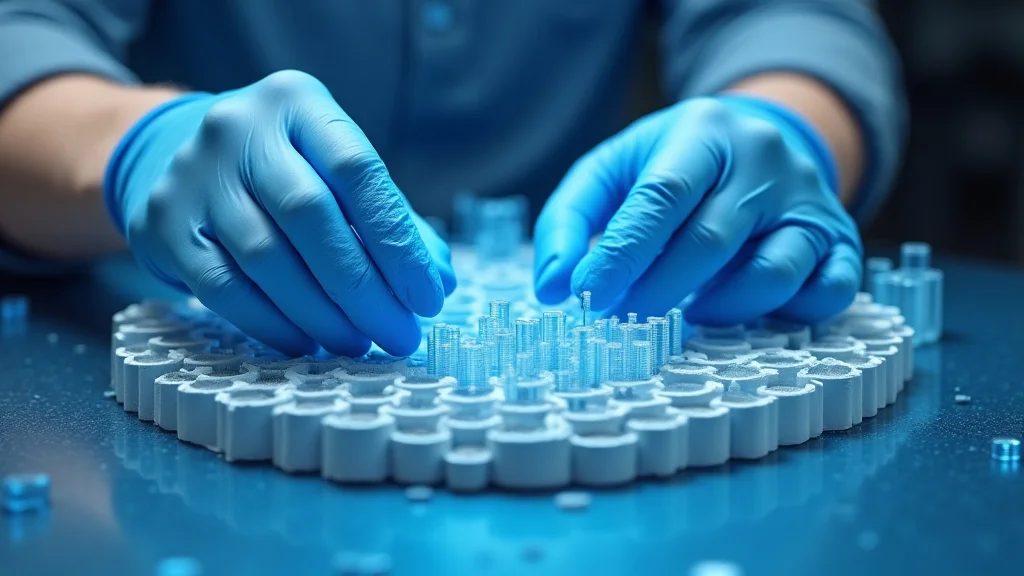
Imagine building a complex sculpture, not layer by layer, but with materials that can morph and change in ways we never thought possible. That’s the promise of 5D printing materials! If you are like me, you are probably intrigued by the amazing things that 3D printing can create. But what if we could go further? This post explores the exciting frontier of 5D printing materials, from the science behind their creation to their real-world applications. By the end, you will grasp the core concepts, discover what is possible, and see where this tech is headed. You will gain a thorough knowledge of how these advanced materials are created and used, improving your awareness of this innovative technology and its potential.
Key Takeaways
- 5D printing goes beyond 3D by adding a fourth and fifth dimension, allowing for complex material properties and internal changes.
- Smart materials, such as shape-memory polymers, are a critical component, reacting to stimuli like temperature or light.
- The materials utilized in 5D printing require specific equipment and post-processing techniques.
- Applications are wide-ranging, from medicine to aerospace, with many potential benefits.
- The future of 5D printing is bright, with ongoing research pushing boundaries.
- Challenges such as cost and material availability still exist.
The Fundamentals of 5D Printing
Traditional 3D printing, also known as additive manufacturing, creates objects by adding material layer by layer in three dimensions – length, width, and height. 5D printing expands this concept by incorporating two additional dimensions. The fourth dimension usually represents time, while the fifth can involve variables like environmental factors, material properties, or even internal stresses. This enables the creation of objects that can change shape, react to their environment, or exhibit dynamic properties. This method moves beyond static objects, providing the ability to build functional, adaptable structures.
The Fourth Dimension: Time and Dynamic Properties
The fourth dimension is commonly represented by time. This is where a printed object’s characteristics evolve over a certain period. This could involve materials that can change their shape, composition, or functionality in response to external conditions, like temperature, pressure, or light. Objects can be designed to self-assemble, self-repair, or transform in specific ways after printing. The concept is especially helpful for creating adaptable medical implants that change with the body’s needs. The inclusion of the time element gives rise to the possibility of dynamic material performance, opening paths to smart structures.
- Shape-Memory Materials: These materials can memorize and return to a pre-defined shape after being deformed, activated by changes in temperature or other stimuli.
- Self-Healing Materials: These materials contain microcapsules filled with healing agents that are released when the material is damaged, repairing cracks or other imperfections.
- Responsive Polymers: Polymers that change their properties or shape based on external conditions like light, electricity, or chemicals.
- Living Materials: Incorporating cells or biological elements, allowing the object to change and adapt, with the ability to grow, replicate, or even heal.
The development of the fourth dimension in printing requires a focus on material science and control over material behavior. By tuning the structure and composition of the material, engineers can program responses into the printed object. This expands the ways that objects can be used in dynamic environments. Imagine self-assembling structures in space that automatically adapt to new conditions.
The Fifth Dimension: Variables and Advanced Functionality
The fifth dimension in 5D printing relates to the variability of material properties. This could encompass internal stress, material composition gradients, or other factors affecting the structure. This permits creating objects with varied characteristics across the structure, enabling complex features, such as integrated sensors, circuits, or channels. The object can be designed with a range of material properties in each printed layer, allowing the object to change its functionality or behavior in a specified manner. This approach allows printing complex geometries and creating objects with a mixture of functional capabilities in a single process.
- Gradient Materials: Creating objects with gradually changing material properties, such as a gradual change in hardness or flexibility.
- Embedded Functionality: Incorporating sensors, electronics, or other functional components during the printing process.
- Multi-Material Printing: Using several materials within a single print to create objects with a varied blend of properties.
- Internal Structure Control: Modifying the object’s internal structure to manipulate its mechanical properties or functional characteristics.
The fifth dimension demands improved methods for material processing and design. By carefully controlling the material deposition and solidification processes, users can create objects with highly tailored characteristics. This moves beyond traditional limitations, permitting the design and manufacture of advanced, multifunctional objects that were once inconceivable.
Smart Materials: The Building Blocks of 5D Printing Materials
Smart materials are an essential component of 5D printing. They react to external stimuli and change their properties or shape. These materials open opportunities for building dynamic and adaptable structures. The properties of smart materials are a crucial factor in building effective objects, and their selection impacts the usefulness of 5D printing. The ability to control these materials is central to the design and performance of 5D-printed products.
Shape-Memory Polymers
Shape-memory polymers (SMPs) are a key class of smart materials. These polymers can “remember” a specific shape and revert to it after being deformed. They respond to stimuli like heat, light, or electricity, allowing for complex shape changes. SMPs are used in various applications, from self-fitting medical implants to adaptable aerospace components. The adaptability of these materials makes them ideal for applications requiring dynamic shape changes or responses to environmental factors. They are key elements in the development of 5D printed objects that change over time.
- Heat-Activated SMPs: These polymers reshape in reaction to a particular temperature change.
- Light-Activated SMPs: These polymers react to light, enabling remote shape manipulation.
- Multi-Shape SMPs: Certain SMPs are designed to hold several shapes and can switch between them based on external stimuli.
- Applications: Medical devices (stents, self-tightening sutures), aerospace components (adaptable wings), and consumer products (self-repairing objects).
Shape-memory polymers present new design freedoms. They allow the creation of self-assembling structures. Researchers are working to enhance these materials’ reaction speeds and accuracy. They are improving their use in real-world scenarios, making them a driving force behind innovative applications.
Other Smart Materials
Beyond shape-memory polymers, various smart materials are applicable for 5D printing. These include piezoelectric materials that generate an electric charge when mechanical stress is applied and magnetorheological fluids, where viscosity changes when exposed to a magnetic field. These materials offer unique abilities that can be employed to build sophisticated 5D printed objects. Integrating these materials requires careful design and printing techniques, but the potential is enormous.
- Piezoelectric Materials: These materials convert mechanical energy into electrical energy and vice-versa.
- Magnetorheological Fluids: The viscosity of these fluids can be changed using a magnetic field.
- Self-Healing Materials: Embedded microcapsules containing healing agents can automatically repair damage.
- Electroactive Polymers: These materials change shape or size in reaction to an electric field.
Each material type brings unique attributes and challenges. The selection of materials depends on the intended application and the required functionalities. Research is continually working to enhance these materials’ performance and expand their usage in advanced printing processes.
Advanced Manufacturing Techniques for 5D Printing Materials
5D printing needs advanced manufacturing techniques to control material properties. These methods make it possible to build complex structures. These techniques often involve combining several methods to get the required features and precision. The equipment and methods employed impact the efficiency and precision of the printing procedure.
Multi-Material Printing
Multi-material printing is a crucial process, where multiple materials are employed in a single print. This permits creation of objects with different properties and functions within one structure. This method allows the integration of various materials, such as flexible, stiff, or conductive elements. The process demands exact control over material deposition, mixing, and curing processes. This approach is key to developing objects with complex structures and varied features.
- Material Compatibility: Understanding the material interaction to prevent issues like warping, delamination, or poor bonding.
- Nozzle Design: Specialized nozzles are often employed to manage the simultaneous dispensing of different materials.
- Software Integration: Specialized software is often needed to manage the print path and material properties.
- Applications: Creating adaptable prosthetics, devices with integrated sensors, and multi-functional aerospace parts.
Multi-material printing promotes design versatility. It offers new options for building objects with advanced capabilities. It is essential for making multifunctional products that meet diverse demands. Current developments are focusing on improving material combinations and the precision of the manufacturing process.
Advanced Deposition Methods
To support 5D printing, different material deposition methods are used. These methods are designed to accurately position and control materials. This includes methods such as inkjet printing, stereolithography, and fused deposition modeling. Each method provides its own set of advantages and challenges. The choice of the deposition method impacts the print quality, precision, and the material selection options. Improved techniques have broadened the range of printable materials and enhanced the precision of object production.
- Inkjet Printing: Precise deposition of material droplets, helpful for multi-material printing and fine details.
- Stereolithography: Using light to solidify liquid resin, used for making high-resolution objects.
- Fused Deposition Modeling (FDM): Extruding material through a nozzle, allowing for simplicity and material flexibility.
- Selective Laser Sintering (SLS): Using a laser to fuse powder particles, often used for complex geometries and functional materials.
The advancement of deposition methods drives the potential of 5D printing. Researchers keep on enhancing these methods to achieve greater precision, speed, and material versatility. They allow for the creation of intricate and functional objects that meet the demands of various applications.
Applications and Impact of 5D Printing Materials
The use of 5D printing materials has great influence in many industries. This tech offers improved ways to design and produce custom objects with complex features. This technology’s effect is changing how we approach design, manufacturing, and product functionality. It is opening up new possibilities in several sectors, bringing innovation and efficiency.
Medical Advancements
In medicine, 5D printing is used to create customized medical implants, prosthetics, and surgical tools. Smart materials make it possible to create implants that respond to the body’s environment, promoting healing and adapting to changing conditions. This method permits the building of patient-specific solutions that are more effective and precise. The advancements in medical applications aim to enhance patient outcomes and improve healthcare efficiency. The potential is vast, ranging from regenerative medicine to personalized drug delivery systems.
- Custom Implants: Create prosthetics that perfectly match a patient’s anatomy, improving comfort and functionality.
- Self-Healing Materials: Develop implants that repair damage automatically, enhancing longevity.
- Drug Delivery Systems: Make controlled-release systems that react to biological signals, improving treatment effectiveness.
- Bioprinting: Print tissues and organs for transplantation and drug testing.
The benefits of 5D printing in medicine are clear, with enhanced patient outcomes and treatments. Ongoing studies focus on improving the biocompatibility of materials and building complex biological structures. This tech has the potential to transform healthcare, offering novel solutions for difficult medical issues.
Aerospace Innovations
The aerospace sector uses 5D printing to design lightweight, durable, and adaptable components. Smart materials allow creating parts that can change shape or react to environmental changes. This results in optimized performance and efficiency in aircraft and spacecraft. The capacity to build parts with integrated sensors and variable properties is a major benefit. This innovation has the potential to transform aerospace engineering by allowing for lighter, stronger, and more responsive aircraft.
- Adaptive Wings: Wings that change shape in response to flight conditions, optimizing performance.
- Self-Repairing Components: Components that repair damage automatically, increasing the lifespan of aircraft.
- Lightweight Structures: 5D printing allows the building of complex geometries, reducing weight without decreasing strength.
- Integrated Sensors: Embedded sensors that monitor the health of components, offering real-time data.
5D printing helps to create high-performance aircraft and spacecraft. The ongoing research centers on improving material strength and adapting to demanding environmental conditions. These developments are improving fuel efficiency, safety, and functionality, paving the way for innovations in air and space travel.
Challenges and Future Developments
While 5D printing holds immense promise, it faces a number of hurdles. These include material costs, printing speed, and the complexity of integrating multiple materials. Further study is required to enhance the performance and control of smart materials. Even with these challenges, ongoing developments show the potential for this tech.
Material Availability and Costs
The availability and expense of appropriate materials are significant challenges. Many smart materials are expensive or not readily available. This increases the overall cost of 5D printing projects, restricting widespread adoption. Improving the supply chain and driving down the cost of materials will improve the accessibility of the tech. Researchers are looking for novel and cost-effective materials, paving the way for more use in different sectors. Making these materials easier to acquire and more economical is a key step in broadening the use of 5D printing.
- Specialized Polymers: Researching and building new polymers with advanced properties.
- Material Synthesis: Developing methods to synthesize materials more easily and cost-effectively.
- Supply Chain Improvements: Improving the supply of materials to satisfy rising demand.
- Recycling and Sustainability: Utilizing recycled materials to reduce expenses and promote sustainability.
Overcoming material limitations is essential for the growth of 5D printing. Continued innovation is necessary to make the materials more affordable and accessible. These measures will increase the range of uses for the tech, making it useful in different fields.
Technical Refinements and Future Directions
There is continuous progress in improving printing methods, software, and material properties. Researchers are creating novel techniques and materials to enhance performance and versatility. This tech is improving the creation of complicated and responsive objects. These improvements are improving the speed, precision, and efficiency of the production process. The future direction focuses on creating new smart materials and expanding the features of 5D printed objects.
- Faster Printing Speeds: Improving print speeds to reduce production times and costs.
- Enhanced Precision: Increasing the accuracy and resolution of printed objects.
- Advanced Software: Developing better software tools for design, simulation, and process control.
- AI Integration: Using AI to optimize design and printing parameters for better results.
The continued development in 5D printing focuses on improving the technology’s effectiveness and capabilities. These improvements will pave the way for widespread adoption across a variety of industries. The future holds enormous promise, with the potential to transform production and bring forth new innovations.
Common Myths Debunked
Myth 1: 5D Printing Is Just a Marketing Gimmick
The notion that 5D printing is a marketing ploy is false. While the concept may sound futuristic, it is built on solid material science and advanced engineering concepts. It enables the building of dynamic, adaptable objects. It moves beyond standard 3D printing by adding the ability to change over time and incorporate complex characteristics. This technology enables new capabilities that are not achievable with conventional methods.
Myth 2: 5D Printing Is Only for High-Tech Industries
It is incorrect to assume that 5D printing is restricted to specific sectors. While it is useful in medicine and aerospace, its usefulness extends to different fields. As the tech develops and becomes more affordable, it is being used in areas like consumer goods, automotive, and architecture. It enables the manufacture of custom, high-performance objects, impacting numerous industries.
Myth 3: The Materials Are Limited
The belief that 5D printing materials are very limited is not correct. Researchers are actively creating new smart materials. These materials provide different features, like shape memory and self-healing abilities. The ongoing growth in material science is driving innovation. This advancement expands the possibilities of 5D printing applications.
Myth 4: The Process Is Too Expensive for Regular Use
It is a mistake to think that 5D printing is unaffordable. While the start-up costs are substantial, the costs are decreasing as the technology matures. The capacity to create customized objects on demand reduces waste. Furthermore, as the materials get easier to get and production processes develop, the expenses will go down, allowing wider use of the technology.
Myth 5: 5D Printing Is Only About the Fourth Dimension
The assumption that 5D printing is all about the fourth dimension is not entirely true. While the time element, which allows for dynamic properties, is very important, the fifth dimension is also essential. This dimension handles the variation of material properties within the structure. This enables objects to be designed with a range of features. This integrated strategy provides improved control of the material’s performance.
Frequently Asked Questions
Question: What is the main difference between 3D and 5D printing?
Answer: 3D printing builds objects in three dimensions: length, width, and height. 5D printing expands this by adding time (the fourth dimension) and other variables (the fifth dimension), allowing for dynamic and complex material properties.
Question: What are some practical uses of 5D printing?
Answer: 5D printing is used in medicine for custom implants, in aerospace for adaptive components, and in consumer goods for self-repairing objects. These applications have a range of uses, including customized prosthetics and building dynamic aircraft wings.
Question: What are smart materials, and why are they important in 5D printing?
Answer: Smart materials are materials that respond to stimuli like heat or light by changing their properties or shape. They are central to 5D printing because they enable the creation of adaptable and dynamic objects.
Question: What are the main limitations of 5D printing?
Answer: The main challenges include the high cost of materials, the time it takes to print, and the complexities of integrating different materials. Ongoing research is working to address these issues.
Question: What is the future of 5D printing?
Answer: The future looks bright, with advances in materials, software, and techniques. It is expected to create more customized, high-performance, and sustainable products. Further innovation will pave the way for broad use across various industries.
Final Thoughts
The potential of 5D printing materials is impressive, offering the ability to build objects that react to their environment, change over time, and possess a range of tailored properties. This technology is creating new prospects for building objects that can adapt, self-repair, and offer advanced functionality. The integration of smart materials, like shape-memory polymers, allows for the creation of innovative designs across different industries, from medicine to aerospace. Although challenges remain, the progress in material development and manufacturing techniques points to a future where 5D printing plays a key part in production and design. If you are a designer, engineer, or simply curious, explore this area and stay informed about the changes that 5D printing is bringing.