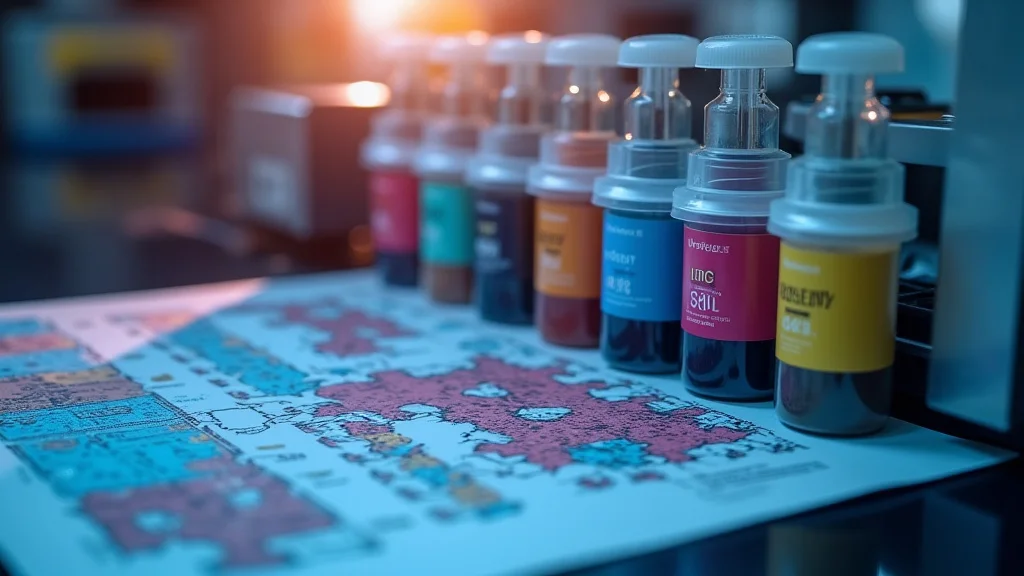
Imagine you’re launching a new product line with vibrant packaging. The success of your product’s appeal depends on the quality and visual impact of its printed materials. This is where finding the right printing inks suppliers becomes crucial. Selecting the correct inks can mean the difference between captivating your audience and having your message get lost in the shuffle. This post will give you the inside scoop on the best printing inks suppliers, so you can make informed choices, and boost your printing projects. You’ll gain a solid grasp of how inks work, what to look for in a supplier, and how to pick the perfect inks for your needs, ultimately leading to better-looking prints and fewer headaches.
Key Takeaways
- Learn the fundamental types of printing inks and their applications.
- Understand the key factors to consider when choosing a printing ink supplier.
- Discover how ink properties influence print quality and performance.
- Get insights into different printing processes and their ink requirements.
- Explore the latest innovations in sustainable and eco-friendly inks.
Choosing the Right Printing Inks Suppliers
The journey of printed materials often starts with the unsung heroes: the printing inks. They are much more than just color; they are a vital element that brings designs to life, ensuring readability, and impacting the overall impression. With the right selection of printing inks suppliers, the whole process gets easier and more reliable. Let’s explore the essential elements that define the ink landscape.
Types of Printing Inks
Selecting the right ink starts with knowing what’s out there. Different types of inks have specific qualities, fitting the various print applications and materials. The right choice affects how the color looks, how long it lasts, and how well it sticks to the material. Knowing these distinctions can help you pick the best ink for your needs.
- Solvent-Based Inks: These inks use solvents to dissolve pigments and binders. They are great for printing on a wide variety of materials, including plastics and vinyl. They offer strong water and abrasion resistance. They’re often used for outdoor signs and banners. The downside is that they can have strong odors and contain volatile organic compounds (VOCs).
- UV-Curable Inks: UV inks use special photoinitiators that harden when exposed to ultraviolet light. This instant curing allows for faster printing speeds and they are suitable for a wide array of substrates. They are ideal for projects requiring quick turnaround times and are good for use on both flexible and rigid surfaces.
- Water-Based Inks: These inks use water as the main solvent. They are considered eco-friendly and have low VOCs. They work best on absorbent materials like paper and cardboard. They are often used for packaging, labels, and posters. They dry slowly, which can impact printing speed, but they offer great color and are easier to clean up.
- Dye-Sublimation Inks: These inks use heat to transfer dyes to materials. They turn from a solid to a gas, allowing them to fuse with the fibers of the material. They work best on polyester fabrics and other synthetic materials. They are commonly used for clothing, flags, and promotional items. They create high-quality, durable prints that won’t peel or crack.
Solvent-based inks consist of pigments, binders, and solvents. The pigment delivers color. Binders help the ink stick to the surface. Solvents dissolve the other ingredients. Once applied, the solvents evaporate, leaving the pigment and binder as a solid film. They are known for their durability and resistance to fading. However, the release of VOCs can raise environmental concerns. Many suppliers now offer low-VOC or eco-solvent options.
UV-curable inks contain pigments, photoinitiators, and monomers. Photoinitiators react with UV light to start the curing process. Monomers link together to form a solid polymer. UV inks offer high gloss and resistance to chemicals and abrasion. They are also known for their environmentally friendly nature due to low VOC emissions. UV inks work efficiently in a range of industrial and commercial printing situations.
Water-based inks are made up of pigments, water, and resins. The water carries the pigment and resins. When printed, the water evaporates, and the resins and pigments bind to the material. They are great for printing on porous materials, and produce clean, sharp images. They’re a favorite choice for those looking for sustainable solutions because of their low environmental impact and ease of cleaning.
Dye-sublimation inks use special dyes that turn into a gas when heated. This gas bonds with the fibers of the material. The process offers vibrant, long-lasting prints, ideal for textiles and hard surfaces. This technique gives rich colors and makes the image part of the material. The results are detailed and strong, often employed in sportswear and home decor.
Factors for Ink Selection
Picking the right ink isn’t just about the color. You need to consider many elements to make sure the final product meets your needs. The choice affects the quality, durability, and cost of your prints. Here are the main things to keep in mind.
- Substrate Compatibility: The material you are printing on (paper, plastic, fabric, etc.) plays a vital role in determining the right ink. Some inks work well on certain surfaces, while others will not. Using the wrong ink can result in poor adhesion, smudging, or fading. Make sure that the ink is made for the material you are using. This ensures the best possible print quality and long-term durability.
- Print Application: Consider how the final product will be used. Will it be used indoors or outdoors? Will it be exposed to sunlight, water, or harsh conditions? Each application calls for different ink characteristics. Outdoor applications require inks that resist fading and weathering. Packaging needs inks that are food-safe and abrasion-resistant. Understanding how the prints will be used guides your ink selection.
- Color Accuracy and Gamut: Color matching is crucial. The printing ink must be able to reproduce the colors accurately. Some inks have a broader color gamut than others. They are able to produce a wider range of colors. You’ll want to choose an ink that can handle your design’s color needs. If your design has specific brand colors, make sure the ink supplier offers custom color matching.
- Cost Considerations: Pricing varies significantly among ink types and suppliers. Determine your budget before you start. Consider the price of the ink per unit, the amount of ink needed for your project, and any additional costs, like custom color matching. Buying in bulk may reduce the price per unit, but you should also factor in storage costs and shelf life.
Substrate compatibility covers whether the ink bonds to the surface. Consider the material’s absorbency, surface tension, and chemical composition. For instance, paper requires inks that can soak into the fibers, while plastics might need inks that can chemically bond or physically adhere. Failing to take this into account leads to poor outcomes like peeling or poor color reproduction.
Print applications determine the qualities needed from the ink. Durability, fade resistance, and scratch resistance become critical for outdoor signs. Food packaging demands inks that meet safety requirements. Apparel printing might focus on flexibility and washability. Considering the end-use from the beginning helps pinpoint the right ink type and properties. For example, a poster needs to be durable, and a business card requires high resolution.
The color gamut is the range of colors an ink can reproduce. A larger gamut allows for more vibrant and detailed images. When choosing an ink, check its ability to match exact color requirements. This is especially vital in branding, where consistent color is essential. Color matching services can help ensure your prints align with your design’s color standards.
Assess your budget and print volumes when considering the cost of the ink. Understand that lower-priced inks can sometimes mean reduced quality or durability. Compare costs and evaluate the total cost of ownership, including waste and running costs. You may save money over time by investing in high-quality inks. This will reduce your need for reprints and keep your customers content.
Finding Reputable Printing Inks Suppliers
When you start searching for printing inks suppliers, finding a reliable partner can make the printing process much easier. A good supplier offers more than just inks; they provide knowledge, support, and quality. Here’s what to look for when selecting the right supplier for your business needs.
Supplier Reputation and Experience
The supplier’s reputation in the market reveals a lot about their reliability and product quality. A well-regarded supplier will likely offer better products and service. Here’s a look at what to examine when evaluating a supplier’s reputation and experience.
- Industry Experience: A supplier’s years in the industry are a good indicator of their expertise. An experienced supplier often has a deeper understanding of the printing process and ink properties. They will likely be familiar with different printing technologies. They will have a proven track record. They know how to handle problems that come up. This experience often translates into better support and higher quality inks.
- Customer Reviews and Testimonials: Customer feedback gives you a clearer view of a supplier’s performance. Read reviews and testimonials from other businesses. Look for patterns in the feedback. Does the supplier provide quality products? Do they offer great customer service? Positive reviews indicate reliability and customer satisfaction. Negative reviews highlight areas of concern, such as product quality or delivery issues.
- Certifications and Accreditations: These demonstrate the supplier’s dedication to quality and environmental standards. Look for certifications like ISO 9001 (quality management) and ISO 14001 (environmental management). These certifications suggest the supplier follows certain standards in its operations. The supplier may also follow industry-specific standards. This is especially vital in the food packaging industry.
- Technical Support and Expertise: A good supplier should provide great technical support. They should be able to assist you with ink selection, troubleshooting, and other questions. Technical knowledge can save you time and money. Look for suppliers who have a team of experts ready to help. They can provide advice on print settings, color matching, and ink compatibility.
The number of years a supplier has been in business is an important factor. Check how long the supplier has been in the industry. Suppliers with a long history usually have stable operations, and have refined their products and services over time. They will understand the current trends and changes in the market. They offer better advice and are more likely to deliver consistent quality.
Online reviews are an invaluable resource to get a true idea of a supplier’s performance. Check reviews on their website or third-party platforms. Look for comments on product quality, customer support, and order fulfillment. Customer testimonials are also helpful. They can provide first-hand experiences of their products and services. Evaluate both positive and negative comments to gain a balanced view.
Certifications confirm that a supplier’s products and processes are of high quality. ISO 9001 shows that the supplier has a robust quality management system. ISO 14001 certification shows that the supplier is committed to minimizing their environmental impact. Other industry-specific certifications, such as those related to food safety, can also be critical. These show the supplier’s commitment to meeting specific standards.
The level of technical support offered is important. A knowledgeable team can help with many printing issues. They can suggest the right inks for your needs, or troubleshoot any issues. They can offer advice on print settings, color management, and ink compatibility. Good technical support can stop production delays. It can also improve the quality of your printed products.
Product Quality and Performance
The quality of printing inks has a direct impact on the final product. Selecting inks that deliver consistent, high-quality results is very important. Quality inks will ensure that your prints look professional and meet your needs. Consider these factors when evaluating the quality and performance of inks.
- Ink Consistency: The consistency of an ink refers to its uniform quality and performance across batches. It guarantees that each print will have the same color, density, and other characteristics. This consistency is especially vital in branded materials. It ensures that the color matches your brand guidelines exactly.
- Color Accuracy: Accurate color reproduction is a key feature of high-quality inks. The ink must accurately reproduce the colors of your design. Accurate colors are necessary for creating prints that match your original artwork. They are necessary for creating prints that meet your customers’ expectations. They also guarantee that your final product appears professional.
- Durability and Longevity: Printing inks must be durable to ensure the prints last. Durability depends on many factors, like the ink type, the substrate, and the application. Inks made for outdoor use need to be resistant to fading. They need to resist water, and abrasion. For indoor uses, it’s important to find inks that maintain their quality. They must maintain their appearance over time.
- Performance in Printing: The performance of the ink during the printing process is critical. A good ink must run smoothly through your printing equipment. It must dry or cure correctly. It must produce sharp, clear images without problems like smudging or clogging. High-performance inks help streamline production. They also reduce downtime.
Ink consistency means that the ink performs the same way every time it is used. This is achieved through careful manufacturing and quality control. Consistent inks provide reliable, predictable results. It reduces waste, and boosts productivity. It also helps to maintain a consistent brand identity across various print projects.
Color accuracy requires inks that are able to precisely match the desired colors in a design. Factors like the ink’s pigment quality, the printing process, and the substrate impact the color reproduction. A supplier providing color-accurate inks will usually offer services like color matching and profiling. This helps ensure that the prints look great and meet your needs.
Durability measures how well an ink can withstand environmental conditions. It also shows the resistance to wear and tear. Choose inks that are suitable for their intended use. For example, UV-curable inks are durable and suited to outdoor applications. They resist fading and offer excellent scratch resistance. Consider the importance of the print, and the conditions it will face. This will help you select the most suitable inks.
The best printing inks do not just look good on paper; they work well in the printing machinery. The ink must flow smoothly through the printing system. It must dry or cure quickly and correctly. Performance features that matter include how it behaves at high speeds and how it responds to different printing techniques. High-performing inks minimize the chances of problems. They also increase printing efficiency.
Supplier Services and Support
Beyond the product itself, the services that a supplier offers can make a big difference in the whole printing experience. A provider who offers great services can help to simplify the printing process. They may offer technical advice, and offer flexibility. They may also provide options like custom color matching. These services can improve the quality and efficiency of your projects.
- Custom Color Matching: If your brand has specific colors, custom color matching services are vital. These services ensure that your prints match your brand. They match the color standards precisely. A supplier who provides color matching will work with you to create custom inks. The ink will have the precise colors you require.
- Technical Support and Training: Printing technologies change. Having technical support helps you resolve problems quickly. Also, training is very important. This helps your team use the inks effectively. A good supplier provides training on ink use, printing techniques, and maintenance.
- Fast Delivery and Order Fulfillment: The supplier’s speed and efficiency in order fulfillment can affect your projects. A provider who is quick with its deliveries will help you meet deadlines. They also reduce any project delays. Look for suppliers who provide reliable shipping options. They must have good inventory management to avoid delays.
- Sustainability Options and Eco-Friendly Inks: If you want to reduce your environmental impact, you should consider a supplier who provides sustainable ink options. Eco-friendly inks are made with sustainable ingredients. They are also made to minimize waste. They are less harmful to the environment. Look for inks with low VOCs and that are made from renewable resources.
Custom color matching includes creating specialized inks to match brand guidelines. This requires sophisticated color measurement tools. It also requires the skills to mix pigments. This service ensures that colors remain consistent across print runs. It ensures that your brand image is steady, whether you’re printing promotional materials or packaging.
Technical support offers assistance with ink selection, print settings, and troubleshooting. The availability of training helps your team use inks correctly. It helps them solve common printing issues. This reduces waste. It also boosts the quality of your prints. Training can make your operations more efficient and reduce downtime.
Timely delivery is important for any printing project. A supplier that can fulfill orders fast, and offers dependable shipping, makes everything easier. They ensure that you get your inks when you need them. They reduce the impact of delays on your production schedule. A well-organized supply chain will help keep your project on track. This will boost customer satisfaction.
The move toward eco-conscious printing is growing. Sustainable inks include plant-based inks, or UV-curable inks with reduced VOC emissions. The supplier’s focus on sustainability includes waste reduction, and eco-friendly packaging. By selecting sustainable options, you contribute to a better environment. You will also improve your brand image.
Common Myths Debunked
Myth 1: All Printing Inks Are the Same
In reality, printing inks differ significantly, depending on their composition, purpose, and the printing method. Each type of ink is crafted to meet the specific requirements of the printing process and the substrate used. Solvent-based inks suit flexible substrates, while UV-curable inks are suited to a wider range of materials, curing immediately when exposed to UV light. The selection of ink heavily impacts the print’s durability, color fidelity, and overall performance.
Myth 2: Eco-Friendly Inks Always Compromise Quality
The truth is that sustainable inks have come a long way. They now match or beat the performance of conventional inks. Technologies have improved, allowing the production of plant-based, soy-based, and UV-curable inks with low VOC emissions. They also provide the same vibrancy, durability, and performance as standard inks, while lowering environmental impacts. The myth of compromise no longer holds.
Myth 3: The Ink Price Is the Only Factor
This is a major misconception. Ink price is important, but quality and compatibility are even more important. Cheaper inks may save money up front, but could lead to issues like poor color accuracy or reduced durability. They can also cause more waste and problems in the printing machine. Always consider the total cost of ownership. The best long-term outcomes are from inks of good quality.
Myth 4: All Suppliers Offer the Same Level of Service
The supplier’s level of support, expertise, and custom services can vary widely. Great suppliers offer more than just inks. They also offer technical support, custom color matching, and training. They support the needs of their customers. This is essential for efficient production and quality prints. Choosing a supplier with complete service guarantees the best printing experience.
Myth 5: You Can Use Any Ink on Any Substrate
Using the wrong ink on the wrong material is a common mistake. Each substrate has unique needs. Inks are designed to bond properly to certain surfaces. For example, paper requires inks that can penetrate the fibers, while plastics might need inks with additives. Using the wrong ink can cause issues like poor adhesion and print failure. Check the substrate compatibility.
Frequently Asked Questions
Question: What are the main types of printing inks?
Answer: The major types are solvent-based, UV-curable, water-based, and dye-sublimation inks.
Question: How do I choose the best ink for my project?
Answer: Consider the substrate, print application, color accuracy needs, and budget when selecting an ink.
Question: What is the most eco-friendly type of printing ink?
Answer: Water-based and some UV-curable inks are generally considered more eco-friendly due to their low VOCs.
Question: Why is supplier reputation important?
Answer: A good reputation often indicates better products, greater support, and a history of satisfied customers.
Question: How do certifications benefit printing inks suppliers?
Answer: Certifications like ISO 9001 and ISO 14001 show a commitment to quality and environmental standards.
Final Thoughts
Choosing the correct printing inks suppliers is essential for any printing project. By understanding the different types of inks, considering the factors of substrate compatibility, and assessing the reputation of suppliers, you’re setting yourself up for success. It’s not simply about finding the cheapest option. It is about locating a supplier that provides high-quality products, great customer service, and technical expertise. Look for partners who offer support, from color matching to eco-friendly alternatives. This helps you get results, whether you are branding a product, designing a marketing campaign, or producing packaging. Select wisely, explore your options, and make sure your prints are vibrant. Take the time to evaluate your needs, conduct research, and begin your project with confidence, knowing you have the right inks and partners in place. This will give you the best possible outcomes for all your printing needs.