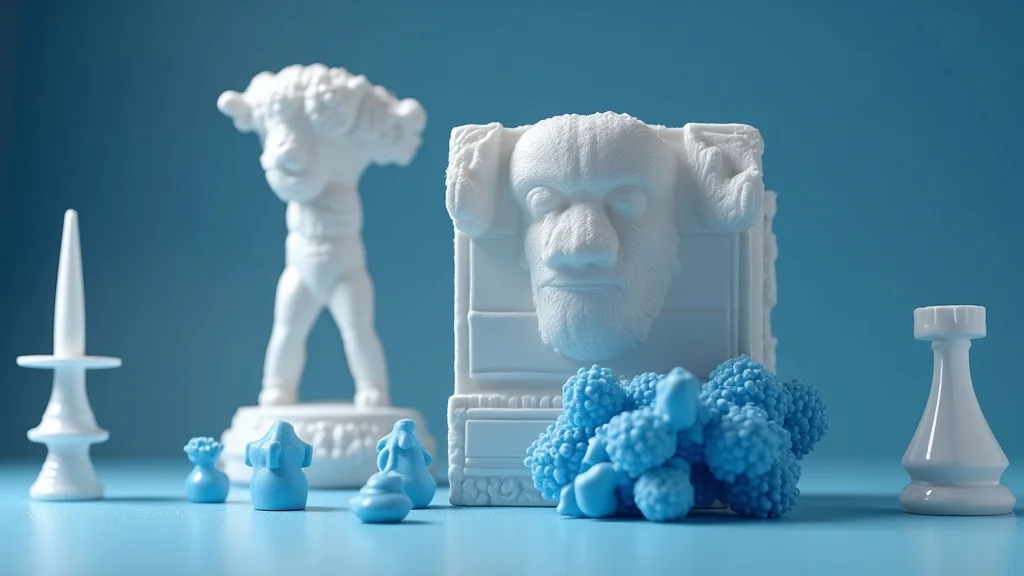
Picture this: you’re trying to fix a broken toy, but a tiny piece is missing. Instead of tossing it, you could just 3D print a replacement! That’s the power of printing tools 3d, offering a whole new way to create and repair things. This post will show you the ins and outs of these amazing tools, from the basics to advanced techniques. You’ll explore different types of 3D printers, the materials they use, and learn how they are used in real life. By the end, you’ll be able to tell what printing tools 3d can do and what to look for when shopping for these.
Key Takeaways
- Discover the fundamentals of 3D printing and how it works.
- Learn about the different types of 3D printers and their unique features.
- Explore various materials used in 3D printing and their properties.
- Understand how to use printing tools 3d for different types of projects.
- Get some tips on choosing the right 3D printer for your needs.
- See some cool, real-world examples of 3D printing in action.
Getting Started with 3D Printing
3D printing, also called additive manufacturing, builds three-dimensional objects layer by layer. It is like building with digital LEGO bricks. Instead of starting with a block of material and removing pieces (like carving a statue), you begin with nothing and add material until the object is complete. This process allows for the creation of very complex shapes that would be nearly impossible to make with traditional methods.
The entire process starts with a digital design, often created using software called CAD (Computer-Aided Design). This digital model is then “sliced” into thin layers. This is like slicing a loaf of bread to see the layers. The 3D printer uses these layer-by-layer instructions to build the object. This technology is being used more and more in manufacturing, design, and even in medicine, demonstrating its wide application range. For example, a dentist can scan your mouth to create an exact model of your teeth.
The Basics of 3D Printing
The core components of a 3D printer typically include a print bed (where the object is built), a print head (which dispenses the material), and a control system (the “brain” of the printer). The print head moves around, following the instructions from the digital model, depositing material onto the print bed. The print bed is typically heated to help the material adhere properly. As each layer is laid down, it bonds to the previous layer, gradually building up the object.
The quality and detail of the final print are determined by factors like the layer thickness (thinner layers mean higher detail) and the type of material used. Different types of printers use different methods to lay down the material, such as melting plastic filaments or curing liquid resins. The choice of printer depends on the type of object, desired level of detail, and material selection.
The Digital Design Process
Creating a 3D model is the first step toward getting something printed. This begins by using CAD software to design your object. There are various CAD programs, from simple free options to complex professional software. These programs let you create 3D shapes, add details, and adjust sizes. You can create a design from scratch or download pre-made models from online repositories.
After your design is complete, it must be exported in a file format that the 3D printer can read, such as an STL file. This file contains the information needed to print the object. The STL file is then imported into a slicing program. This software cuts the 3D model into thin layers, providing the instructions the 3D printer needs to create the object. The settings chosen, like layer thickness and print speed, affect the outcome of the print.
Types of 3D Printers and Their Features
There are several types of 3D printers, each using a different technology. The most common types are Fused Deposition Modeling (FDM), Stereolithography (SLA), and Selective Laser Sintering (SLS). Each type has unique advantages, suited to different applications. The selection of a 3D printer will affect which materials you can use, the print quality, and the cost of the printer.
Understanding these different methods helps you determine which printer meets your needs, whether you are crafting something for fun, making prototypes for a business, or manufacturing parts. The technology in 3D printers is constantly improving, making it easier than ever to get high-quality prints at home or at work.
Fused Deposition Modeling (FDM)
FDM is the most widely used 3D printing method. It works by heating and extruding a thermoplastic filament through a nozzle. The nozzle moves along a specific path, depositing the melted plastic onto the print bed layer by layer. As the plastic cools, it solidifies and bonds to the previous layer, building the object. It’s like using a hot glue gun to make a sculpture.
- FDM printers are generally more affordable than other types of 3D printers.
- They can print a variety of materials, including PLA, ABS, PETG, and others.
- FDM printers are suitable for a wide range of applications, including prototypes, toys, and custom parts.
Because of their simple design, FDM printers are often the most accessible for beginners. The low price point makes them suitable for hobbyists and educational purposes. Some models are designed to be user-friendly, with intuitive interfaces and easy-to-use software. These printers often come with pre-set print profiles for different materials, making the printing process easier.
The material choice affects the print’s characteristics. PLA (Polylactic Acid) is a popular option, as it is easy to print and made from renewable resources. ABS (Acrylonitrile Butadiene Styrene) is stronger and more durable, making it suitable for functional parts. PETG (Polyethylene Terephthalate Glycol) combines the strength of ABS with the ease of use of PLA. Each material has its own benefits and drawbacks, so selecting the correct one is important.
FDM printers are used in many industries, from manufacturing to education. They are excellent for creating prototypes to test product ideas. The ability to quickly and affordably print custom parts is a major advantage. Furthermore, the technology is also used to make educational tools, such as teaching aids for classrooms.
Stereolithography (SLA)
SLA uses a liquid resin that is cured by a UV laser. The laser traces the shape of each layer on the surface of the resin, causing it to harden. The build platform then moves upward, and the process repeats until the object is complete. The result is a high level of detail and a smooth surface finish. SLA is often used for creating detailed models and parts.
- SLA produces high-resolution prints with smooth surfaces.
- It uses liquid resins that cure when exposed to UV light.
- SLA is used for creating models, prototypes, and other parts requiring high detail and quality.
SLA is known for its ability to produce highly detailed and smooth prints. The precision of the laser allows for fine features, intricate designs, and minimal layer lines. This makes SLA ideal for applications where appearance is critical. It is often used to produce models, miniatures, and dental and medical components.
The resin used in SLA printing can vary, each with different properties. Some resins offer high flexibility, while others are strong and durable. The use of different resins enables a wide range of possible applications. For example, dental resins are used to make dental models and surgical guides. Resin-based printing allows for a level of detail that other printing methods cannot match.
The technology is commonly used in several industries. Designers use SLA for making detailed prototypes, engineers use it to test and refine designs, and medical professionals use it for creating accurate models of the human body for planning surgeries. Jewelry makers also use SLA to create master patterns for casting intricate designs.
Selective Laser Sintering (SLS)
SLS uses a laser to fuse powdered materials, typically nylon, into a solid object. The laser selectively sinters (fuses) the powder particles together layer by layer, building the object within a bed of unfused powder. The unfused powder acts as a support material, so no additional support structures are needed, letting you create complex geometries.
- SLS can print complex geometries without support structures.
- It uses powdered materials, such as nylon, that are fused by a laser.
- SLS is commonly used in the production of functional parts, prototypes, and low-volume manufacturing.
Because the part is surrounded by unsintered powder during printing, SLS allows for making complex designs without the need for support structures. This frees designers from many of the constraints of other 3D printing methods. The ability to make interconnected or enclosed parts adds flexibility to the design process. SLS allows for the creation of parts with intricate internal structures.
The use of powdered materials provides flexibility in material selection. Nylon is a widely used material, with excellent strength and durability. Other materials include composites and even some metals. The choice of material affects the physical properties of the print, making SLS suitable for various applications. SLS can produce strong, durable parts.
SLS is frequently used in the automotive and aerospace industries to make parts with high strength. Prototypes benefit from the ability to create complex shapes. It’s also suitable for small production runs of parts, where the strength and geometric freedom of SLS offer advantages over other methods. This is an efficient option for specialized and functional parts.
Materials Used in 3D Printing
The materials used in 3D printing are diverse, each with unique properties. The most common materials are plastics, but other materials, like metals and ceramics, are also used. The selection of materials depends on the type of printer and the desired properties of the final product. Understanding the characteristics of different materials is key to selecting the right one for your project.
For example, some materials are best for making sturdy tools, while others are better for creating flexible items. Material science is evolving, leading to the development of new materials to broaden the potential for 3D printing. The materials you select directly affect the cost and functionality of the printed object.
Common 3D Printing Materials
- PLA (Polylactic Acid) is a biodegradable plastic derived from renewable resources.
- ABS (Acrylonitrile Butadiene Styrene) is a durable and impact-resistant plastic.
- PETG (Polyethylene Terephthalate Glycol) combines the properties of PLA and ABS.
- Nylon is a strong and flexible material often used in SLS printing.
PLA is a popular choice for beginners due to its ease of use and low printing temperature. It is non-toxic and emits little to no odor when printing. It’s often used for making decorative items, toys, and other parts that don’t need to endure high stress. Its biodegradability makes it environmentally friendly. Also, it comes in a variety of colors.
ABS is the go-to material for creating functional parts that need to withstand rough use. It is used in making things like car parts, protective cases, and tools. ABS requires a higher printing temperature, making it unsuitable for beginners. However, its strength and durability make it an option for demanding applications.
PETG is known for its excellent balance of properties. It is both strong and easy to print, with minimal warping. It has good chemical resistance. This makes it an excellent choice for a wide range of applications, from mechanical parts to food-safe containers. Its versatility makes it a good option.
Nylon is a popular choice in SLS 3D printing. It is known for its strength, durability, and resistance to abrasion. It can create complex parts with excellent mechanical properties. This makes nylon ideal for functional parts, prototypes, and low-volume manufacturing. Nylon is suitable for parts that must withstand stress and wear.
Material Properties and Their Impact
The material properties of the materials you select have a direct impact on the performance of the final 3D printed object. Properties like strength, flexibility, temperature resistance, and chemical resistance are important. The right material selection guarantees that the object can endure the environment it will be used in and meet the design’s functional needs.
For example, a part that has to be in high heat may require a material that will not melt at that temperature. In contrast, if the part must be flexible, you will want a flexible material. Considering these properties is vital for achieving the desired results. Understanding the characteristics of different materials is the key to achieving successful 3D prints.
Applications of 3D Printing Tools
Printing tools 3D has revolutionized various fields. This technology has become essential in manufacturing, medicine, education, and even in art. The ability to create parts and components quickly and efficiently has transformed how products are developed and produced. Understanding the diverse applications can show the potential of this technology.
3D printing tools have enabled a level of customization and innovation not possible before. Whether it is creating custom prosthetics, designing specialized tools, or building intricate art pieces, 3D printing is shaping the way we create the world around us. With each technological advancement, the possibilities of 3D printing grow.
Real-Life Examples of 3D Printing
- Medical Applications: 3D printing is used to make custom prosthetics, surgical guides, and implants.
- Manufacturing: 3D printing is utilized for prototyping, tooling, and low-volume production.
- Education: 3D printers are used in schools and universities to teach design and engineering.
3D printing has made it possible to create highly specialized medical devices. For example, patients with limb differences can receive affordable and custom-fit prosthetics. Surgeons use 3D-printed guides to plan complex procedures with greater precision. It allows the creation of implants that precisely fit a patient’s anatomy, leading to better outcomes. These custom solutions improve the quality of life.
Manufacturers use 3D printing to create prototypes quickly. This enables designers and engineers to test designs and find possible issues early in the development cycle. It is used for making jigs and fixtures to assist in assembly. Also, 3D printing is suitable for creating small batches of customized parts. This reduces costs and lead times compared to traditional methods.
3D printing helps students bring their designs to life. It makes learning practical and engaging. Students can explore design principles, experiment with different materials, and create physical models of their designs. Teachers use 3D printers to make teaching aids, such as models of complex structures. This hands-on approach builds students’ problem-solving skills.
Printing Tools 3D in Arts and Design
Artists and designers use 3D printing to create unique and complex forms. These tools are used to realize ideas that would be hard to make using conventional methods. From intricate sculptures to functional designs, 3D printing has opened new possibilities for creative expression. The ability to customize and produce designs provides a platform for innovation.
For example, some artists make detailed sculptures with complex geometries. Designers can produce custom products that meet specific needs, such as a specialized lamp or phone case. The quick prototyping feature of 3D printing lets designers experiment with designs. This encourages innovation and allows them to realize their creative visions.
Choosing the Right 3D Printer
Choosing the correct 3D printer can seem challenging. The many models and types can be overwhelming. Some key factors to consider are the type of objects you plan to print, your budget, and the degree of detail needed. Knowing your specific needs helps you to decide which features are essential and which are not. This will help you select a 3D printer that is right for you.
Also, it is important to think about the ease of use, materials, and support options when making your choice. If you are a beginner, look for a user-friendly printer with pre-set print profiles. If you need to print a wide variety of materials, consider a printer that supports multiple material types. Considering these things will lead to a more pleasant experience.
Key Factors to Consider
- Budget is a critical factor, with prices ranging from affordable desktop models to expensive industrial machines.
- The type of objects you plan to print influences which 3D printing technology is best.
- Material compatibility is key; you must be certain the printer supports the materials you need.
- Ease of use, including software and interface, plays an important part in your experience.
Desktop 3D printers are usually more affordable, making them great for hobbyists, students, and small businesses. Industrial printers, with their advanced capabilities and features, cost much more. Setting a budget helps to narrow down the options. It’s necessary to balance cost and features when picking a 3D printer.
If you’re making detailed models, SLA or resin-based printers may be suitable. If you will be printing larger or more functional parts, FDM or SLS printers are a great option. Considering the complexity of your objects will help you choose which technology is best. Each method offers a unique set of pros and cons.
Some printers only support specific materials. If you need to print with a range of materials, be sure to find a printer that can handle them. Researching the available materials will help you to select the right one. Different materials give different physical properties, so it is necessary to consider the material compatibility when choosing a printer.
Look for a printer with user-friendly software and an intuitive interface, especially if you’re a beginner. Some printers come with pre-set print profiles. The software and ease of use will have an impact on your experience with the 3D printer. The simpler it is to use, the less time you’ll spend learning the machine.
Tips for Beginners
If you’re new to 3D printing, start with a simple FDM printer. These machines are generally user-friendly, affordable, and work with a variety of materials. Look for printers that have easy-to-use software and online support. You can start with basic projects and get experience. As you improve your skills and confidence, you can move on to other printer types.
Make use of online resources. Many tutorials, forums, and communities offer guides, support, and troubleshooting advice. Try printing small objects or using pre-designed models to get familiar with the process. The more practice you get, the more comfortable you’ll feel with the technology. Start slowly and gain experience.
Common Myths Debunked
Myth 1: 3D Printing Is Only for Professionals
Many people assume that 3D printing is solely for professionals in industries like engineering or manufacturing. In reality, 3D printing has become accessible to hobbyists and beginners. Affordable desktop printers and user-friendly software have made the technology accessible. Various online communities provide support and resources for learning and sharing designs. The process is easy to learn.
Myth 2: 3D Prints Are Always Weak
Some believe that 3D-printed objects are always fragile. However, this is not true. The strength of a 3D-printed part depends on the material, the printing technology, and the design. Some materials, like ABS and nylon, are very strong and can withstand considerable stress. Proper designs and printing settings can maximize the strength of the prints. You can print objects for practical use.
Myth 3: 3D Printing Is Extremely Expensive
It’s easy to assume that 3D printing is expensive. While industrial-grade printers can be pricey, affordable desktop models are available for under $300. The cost of materials, like PLA filament, is also relatively low. Moreover, the ability to create customized parts on demand can save you money. The entry cost is lower than you might think.
Myth 4: 3D Printing Is Slow
Many think that 3D printing takes a long time. However, print times vary depending on the object’s size, detail, and the printer’s settings. Small, simple objects can be printed in a matter of hours. More complex prints may take longer. Advanced printers can be quicker than you think. The technology keeps advancing, reducing print times.
Myth 5: 3D Printing Is Difficult to Learn
Many people think 3D printing is a difficult skill. While it may require some practice and learning, it is easier than ever to get started. User-friendly software, tutorials, and online resources simplify the process. Many 3D printers come with easy-to-use interfaces. As you create more prints, you will get more comfortable. It is fun to learn.
Frequently Asked Questions
Question: What’s the difference between FDM and SLA printers?
Answer: FDM printers use heated plastic filaments, and SLA printers use UV light to cure liquid resin. FDM is often more affordable, while SLA produces more detailed prints.
Question: Can I print with metal at home?
Answer: While some advanced 3D printers can print with metal, they are typically expensive and for industrial use. Metal printing at home is rare.
Question: What can I make with a 3D printer?
Answer: You can make a wide range of objects, from toys and prototypes to custom parts and art. The possibilities are vast.
Question: How do I find 3D models to print?
Answer: There are many online repositories where you can download pre-made 3D models, such as Thingiverse and MyMiniFactory. You can also design your own using CAD software.
Question: What is “slicing” in 3D printing?
Answer: Slicing is the process of converting a 3D model into instructions that a 3D printer can understand. It involves cutting the model into thin layers.
Final Thoughts
Printing tools 3D offers a flexible and impactful way of creating things. From making simple toys to complex machinery, this technology enables you to realize your ideas. The technology behind 3D printing offers an incredible amount of choice for materials and models. The ease of getting started and the vast amount of online help have made this field available to almost everyone.
As you explore the world of 3D printing, experiment with different materials and designs to see what you can create. Embrace the learning process, engage with the community, and let your imagination drive you. The options are endless, and you can achieve amazing results with a little practice and creativity. Embrace your creative side and begin your own 3D printing journey.