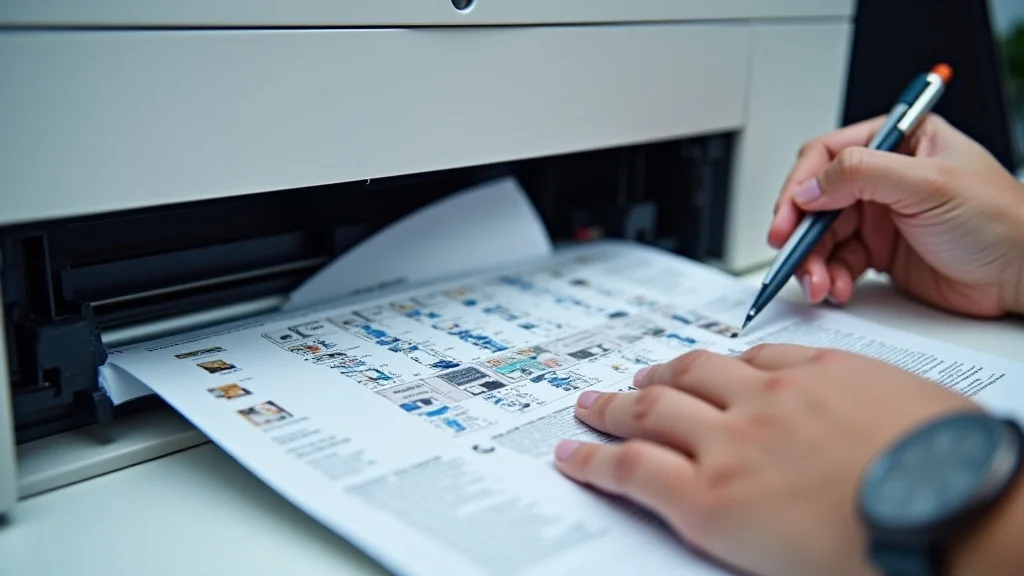
Ever found yourself staring blankly at a printer that refuses to cooperate? You’re not alone! Many people experience frustration when their printer won’t print. A simple solution to this common problem is to know how to print a printing test page. This handy action is a quick diagnostic step, a printer’s way of telling you “Everything’s fine here!” or “Something’s amiss.” In this guide, you’ll learn exactly why and how to print a printing test page, saving you time, money, and a whole lot of printer-related headaches. Prepare to become a printing pro! By following this guide, you will get the best troubleshooting methods, increasing your knowledge and getting the most from your printer.
Key Takeaways
- Printing a test page helps determine if your printer is working correctly.
- You can learn the simple steps for printing a test page on different operating systems.
- Test pages can diagnose common print issues such as blurry text or incorrect colors.
- Troubleshooting tips help fix common printing problems identified by the test page.
- Understanding the information on a test page is key to effective printer maintenance.
- Regular printing of test pages can extend the life and proper function of your printer.
Why Print a Test Page?
The first question most users ask when experiencing a printing issue is, “Why should I print a test page?” The answer is simple: it is a basic diagnostic tool. Think of it like a doctor’s checkup for your printer. The primary function of a printing test page is to confirm whether the printer hardware is functioning correctly. If the test page prints without issues, you can usually assume the printer itself is working fine. If the test page shows problems (blurry text, missing colors, etc.), you know the printer needs attention. The test page generates a standardized print output. This output contains a variety of test elements. These can then be assessed. The goal is to quickly find and address printing issues.
Assessing the Test Page Output
Examining the printing test page output carefully will often reveal the source of the problem. A correctly printed test page will display clean lines, accurate colors (if your printer supports color), and sharp text. You can also analyze specific elements like the alignment test, color blocks, and nozzle checks. A blurry test page indicates a potential problem with the print head, ink cartridges, or paper type. Missing colors suggest an issue with the specific color cartridge or print head for that color. Misalignment issues point to problems in the printer’s alignment settings or mechanics. This methodical analysis guides you toward the proper troubleshooting steps, saving you time and money. Always remember to check your user manual for details on your printer’s test page specifics.
- Color Accuracy: Check if the colors are accurate. If the colors are wrong, it is a printhead issue.
- Text Quality: Ensure text is sharp and clear. Blurry text suggests an ink issue or print head problem.
- Alignment: Lines should be straight, not skewed. Skewed or misaligned print means it needs alignment.
- Missing Colors: Verify all color blocks are printed. Check ink cartridges if a color is missing.
How to Print a Test Page on Windows
Printing a test page on Windows is a straightforward process. First, ensure your printer is turned on and connected to your computer. Go to the “Devices and Printers” section in the Control Panel (or Settings in newer versions of Windows). Right-click on your printer icon, and select “Printer properties.” A new window will appear, often with tabs like “General,” “Sharing,” etc. Find the “Print Test Page” button on the “General” tab. Clicking this initiates the printing process. You will see a test page output immediately after this action. If this action does not work, then there is an issue between your printer and your computer.
- Find Printer Settings: Locate and click on the printer and click ‘Printer Properties.’
- Access Test Page Option: Navigate to the ‘General’ tab in the printer properties.
- Initiate Printing: Click the ‘Print Test Page’ button to start printing.
- Examine the Output: Evaluate the resulting test page for any issues.
- Troubleshoot if Needed: Address any printing issues based on the test page results.
How to Print a Test Page on macOS
Printing a test page on macOS is similar to printing on Windows, but the steps are slightly different. First, make sure your printer is connected and powered on. Open “System Preferences” and select “Printers & Scanners.” Then, select your printer from the list. Click on “Options & Supplies.” In the “Utility” tab, you’ll usually find the option to print a test page. Once you click this, the printer will begin the test print. The output produced from your printer is essential for diagnostics. It will help verify if your printer is working correctly. This process is very important. It is used to quickly identify and solve print issues.
- Navigate to Printers & Scanners: Locate and open the ‘System Preferences’ and click on ‘Printers & Scanners.’
- Select Your Printer: Choose your printer from the list.
- Access Options & Supplies: Click ‘Options & Supplies’ to proceed.
- Utilize the Utility Tab: Go to the ‘Utility’ tab to find the test page option.
- Begin Printing: Start the test page print to assess printer functionality.
Troubleshooting Common Print Issues Revealed by the Test Page
The printing test page provides valuable information when identifying and solving problems. Several issues may be found, so it’s important to know how to interpret them and what actions to take. Common issues include blurry text, missing colors, and alignment problems. Each problem often points to a different root cause, requiring unique corrective actions. Troubleshooting can become simpler with this test page. This leads to less time spent trying to guess the issue and more time getting it fixed.
Addressing Blurry or Faded Text
Blurry or faded text is a common problem, and it usually stems from the print head, ink cartridges, or the paper. If the text appears blurry, it can signify that the print head nozzles are clogged, preventing the ink from being correctly applied to the paper. Sometimes, the ink cartridges may be low on ink or even dried out. The quality of the paper is also a factor. If the paper absorbs ink too quickly or is not designed for inkjet or laser printing, it can lead to text issues. If you have an inkjet printer, try running a print head cleaning cycle, usually accessible through your printer’s settings or software. Replace the ink cartridges if the ink level is low or if the print quality does not improve. Verify that you’re using the correct type of paper for your printer.
- Print Head Cleaning: Run a print head cleaning cycle.
- Ink Level Check: Ensure ink cartridges are not empty.
- Cartridge Replacement: Replace low ink cartridges.
- Paper Type: Use appropriate paper.
- Print Head Alignment: Align the print head.
Dealing with Missing Colors
Missing colors on your printing test page are another common issue that can instantly reveal a problem with the ink supply or the print head. If one or more colors are not printing, the corresponding ink cartridge might be empty, clogged, or improperly installed. Examine the ink cartridges to confirm that the ink level is adequate. Often, the color cartridges have a small printhead. It may be clogged from inactivity. Try performing a print head cleaning cycle. If cleaning does not resolve the issue, the cartridge may be damaged, or the printer could have a more serious problem. Try replacing the ink cartridges to see if the issue is solved. If the problem persists, the printer may need professional maintenance.
- Ink Cartridge Check: Verify ink cartridge levels.
- Cartridge Replacement: Replace any empty or damaged cartridges.
- Print Head Cleaning: Use print head cleaning cycles.
- Nozzle Check Pattern: Use the nozzle check option.
- Professional Service: Contact a professional for help.
Fixing Alignment Problems
Alignment problems can cause text and images to appear skewed or misaligned. This indicates that your printer’s print heads are not properly calibrated. Modern printers usually have an automatic alignment feature, but you might need to run the alignment manually if you encounter issues. Open your printer’s software or settings. Then, search for a “Print Head Alignment” tool. Follow the on-screen instructions, which often involve printing an alignment test page. You may need to select the most appropriate alignment pattern. The printer will then automatically adjust its print heads. If automatic alignment doesn’t work, there could be a mechanical problem. Contact a technician if the issue persists.
- Software Tool: Open the printer software.
- Find Alignment Tool: Locate the print head alignment tool.
- Print Alignment Page: Follow the on-screen instructions.
- Examine the Output: Assess the alignment patterns.
- Repeat as Needed: Adjust settings to improve print alignment.
Understanding Information from Your Test Page
To fully benefit from a printing test page, you need to understand the details within it. Different printer models may have different layouts, but some elements are common. Understanding those common items and recognizing deviations from them can significantly help your printer maintenance. By understanding your specific test page, you can identify many printing issues quickly. Understanding the information on your test page can help you ensure the best possible print quality.
Deciphering Alignment Tests
Alignment tests, often included on a printing test page, are key to guaranteeing that text and images print correctly. The goal is to make sure the printer’s print heads are correctly aligned. This prevents the printed output from appearing blurry, skewed, or offset. Typically, the test involves printing several lines or patterns, which will vary in alignment. You need to identify the one that looks the best to you. By studying the alignment test output, you will know exactly what the printer’s alignment issues are. These tests are essential for achieving clear and accurate printing.
- Examine Lines: Check for straightness of the alignment lines.
- Identify Perfect Alignment: Look for the best-aligned pattern.
- Software Adjustment: Use the printer software to adjust settings.
- Physical Alignment: Look for physical alignment if there is an issue.
- Re-Run Tests: Repeat until alignment is perfect.
Interpreting Color Swatches and Patterns
Color swatches and patterns help in assessing the printer’s color accuracy and the ink’s condition. These elements typically include blocks of various colors, gradients, and sometimes more complex patterns. Checking these patterns helps to pinpoint issues with individual ink cartridges or the print head. Accurate color swatches should appear uniform and consistent. If a color is missing, streaked, or showing an incorrect shade, it indicates a problem with that particular ink cartridge or the color print head. Examine the gradients carefully. They should transition smoothly without any banding or abrupt changes in color. Use these indicators to troubleshoot and get perfect color prints.
- Check Color Uniformity: Make sure each color block is consistent.
- Look for Streaks: Watch for any inconsistencies within the color blocks.
- Evaluate Gradients: Examine the smoothness of color transitions.
- Identify Missing Colors: Note if there are any missing colors.
- Adjust Settings: Make any necessary adjustments.
Analyzing Nozzle Check Patterns
The nozzle check pattern is a grid-like arrangement of small lines or dots printed by the printer. It is the most useful diagnostic element for diagnosing issues with the print head’s nozzles. Each pattern corresponds to a specific color or print head. Ideally, the nozzle check pattern should be complete, with each line or dot clearly printed without any breaks or missing sections. Breaks or missing sections in the pattern mean that one or more nozzles are clogged. This is a common problem. The result of a clogged print head is usually poor print quality. Examine the nozzle check pattern closely to diagnose the cause of your printing problems. This check helps you find the correct solution. It may include a print head cleaning cycle or other maintenance tasks.
- Examine Lines: Confirm lines are complete.
- Check for Gaps: Ensure lines do not have missing sections.
- Identify Clogs: Find sections with missing dots.
- Clean Print Heads: Run a print head cleaning cycle.
- Repeat Checks: Re-run the test.
Printer Maintenance and the Test Page
Regular printer maintenance, including the occasional printing test page, is essential. This helps to extend the life of your printer and maintain its print quality. Implementing a regular maintenance plan can help you prevent many common issues and save you time and money. By incorporating these practices into your printing routine, you’ll be able to keep your printer running smoothly. Doing this will also make sure the printed material looks its best. The goal is to increase the life of your printer.
Regularly Printing a Test Page
Regular printing of a test page is an important habit for anyone who uses a printer. It offers a quick way to check if there is an issue. It can help you find problems early before they cause extensive print issues. Printing a test page every week or two, or whenever you notice a decline in print quality, is a good habit. You should perform a test page after a period of printer inactivity. Each test page provides crucial information that helps you keep your printer in good condition. By regularly checking the status of your printer, you can make sure that it always performs well.
- Establish a Routine: Print a test page at set intervals.
- Monitor Print Quality: Check quality to look for changes.
- Identify Problems Early: Use test pages to find any issues.
- Adjust Maintenance: Adjust maintenance to solve problems.
- Prevent Costly Repairs: Routine checks help prevent damage.
Cleaning and Calibrating Your Printer
Beyond regularly printing a test page, it’s necessary to also incorporate cleaning and calibration into your printer maintenance routine. Your printer may need regular cleaning. Modern printers often include automated cleaning cycles that can be activated from the printer’s settings or the software. Follow the instructions to run a cleaning cycle to help unclog nozzles and clear any debris. Over time, your printer’s settings may need adjustment. You should also calibrate your printer. This can include print head alignment, color calibration, and other settings. These steps help keep your printer operating at its best. They also ensure the best possible print quality.
- Follow Instructions: Follow instructions for cleaning and calibration.
- Check for Guides: Find calibration and cleaning guides.
- Perform Cleaning Cycles: Use the cleaning cycles to clean your printer.
- Print Head Alignment: Align the print head to optimize prints.
- Color Calibration: Calibrate the colors for better quality.
Using the Right Supplies
Using the right supplies is essential for keeping your printer operating well and producing high-quality prints. Always use the correct type of paper for your printer. Using the right supplies can prevent problems, such as paper jams and poor print quality. Always buy the recommended ink cartridges or toner for your printer model. Using non-recommended supplies may cause problems with your printer. This can result in costly repairs. When buying ink or toner, try to obtain them from trusted sources. Doing so will ensure the supply quality and printer compatibility. If you do this regularly, then your printer will work well. This will prevent issues with your printer and guarantee good results.
- Paper Type: Match the paper type to the printer.
- Ink/Toner: Use recommended ink or toner cartridges.
- Genuine Supplies: Buy supplies from trusted brands.
- Storage Conditions: Store supplies properly.
- Replace Supplies: Replace the ink and toner regularly.
Common Myths Debunked
Myth 1: Printing a Test Page Is Complicated
Many people believe that printing a test page is a difficult and time-consuming process. The reality is that printing a test page is very simple. It only takes a few steps. The process is similar across most operating systems. The steps usually involve accessing your printer’s settings. Then, you select the option to print a test page. Once you have done that, your printer will quickly produce a test print. This method is very useful and easy, and it provides quick information about your printer’s current condition.
Myth 2: Test Pages Are Only for Professional Printers
There’s a myth that printing test pages are only for use on expensive professional printers, not for home or office printers. Actually, test pages are useful for all types of printers, from basic home models to complex business devices. They use the same print diagnostic approach to find and identify printing problems. Regular use of test pages is especially crucial for less costly printers. They help identify problems before they develop into major issues. This is a simple and beneficial tool for everyone who uses a printer.
Myth 3: Test Pages Waste Ink
Some users think printing a test page wastes a lot of ink. In reality, a test page uses a small amount of ink compared to regular printing. The amount of ink used is minimal. The purpose of a test page is to diagnose potential issues and prevent larger ink consumption in the long run. If the test page shows that the printer is operating correctly, then it confirms the printer’s status. It saves you from printing documents with poor quality. This avoids the cost of wasted print jobs.
Myth 4: If My Printer Prints, It Is Working Fine
Many people believe that their printer is in good working order simply because it prints something. However, the print output’s quality is also an important factor. A printer may produce text or images, but the quality can still be poor. Printing a printing test page allows you to evaluate your print quality. This helps you to find issues like blurred text, missing colors, and alignment problems. If you don’t use a test page, you may be unaware of these problems.
Myth 5: Test Pages Only Show Problems
Some people think that test pages are only for pointing out problems with a printer. A test page is a diagnostic tool, but it serves multiple purposes. The main function is to confirm the printer’s condition. The test page will reveal any print issues. The test page also confirms the printer is operating as intended. It provides data for basic maintenance, such as ensuring colors are properly aligned. It also determines if the nozzles are clear.
Frequently Asked Questions
Question: How often should I print a test page?
Answer: It’s best to print a test page every couple of weeks or whenever you notice a decline in print quality.
Question: What do I do if my test page has blurry text?
Answer: Run a print head cleaning cycle from your printer’s settings. If that doesn’t work, replace the ink cartridge.
Question: How can I fix missing colors on a test page?
Answer: Check if the corresponding ink cartridge is empty. Then, replace it and run a print head cleaning cycle.
Question: How do I align my printer using a test page?
Answer: Use the printer software to find the alignment tool and follow the on-screen instructions.
Question: Is a test page the same for every printer model?
Answer: No, the layout and specifics of the test page can vary depending on your printer model, but the core elements are similar.
Final Thoughts
Knowing how to print a printing test page is essential knowledge for anyone who uses a printer. It’s a quick, easy, and efficient process that helps you keep your printing experience smooth. By regularly printing test pages, you can easily identify issues. That gives you a proactive approach to printer maintenance, saving you money and preventing potential headaches. Now that you’ve explored the process and its benefits, make it a habit to print a test page from time to time. This knowledge is your best method to maximize the quality and reliability of your printer. Take control of your printing experience today.