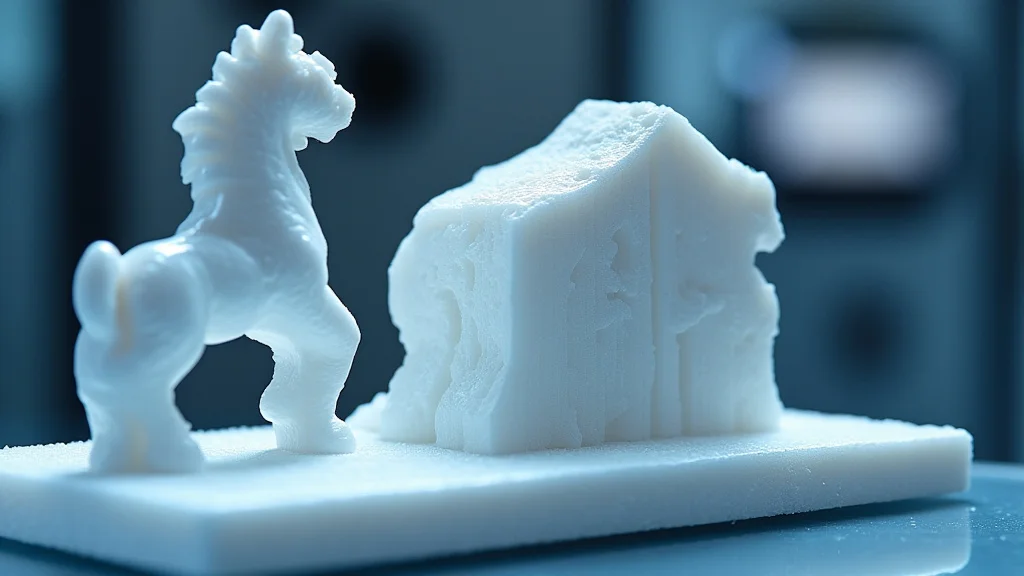
Imagine building a complex sculpture, not layer by layer, but with the ability to control its internal structure and orientation as it’s being made. That’s the exciting promise of 5D printing. This isn’t just about adding an extra dimension; it’s about adding a new level of control and precision to the manufacturing process. By the end of this article, you’ll gain a solid grasp of what makes 5D printing advantages so transformative, and how it’s poised to reshape industries. Get ready to explore the exciting potential.
Key Takeaways
- 5D printing allows for the creation of more complex and durable products.
- It can reduce material waste by optimizing material usage.
- 5D printing offers increased design freedom and customization options.
- The technology improves the efficiency of manufacturing processes.
- It enables the production of parts with enhanced mechanical properties.
- 5D printing opens doors for innovations across multiple industries.
The Fundamentals of 5D Printing
Unlike 3D printing which typically builds objects layer by layer in three spatial dimensions (length, width, and height), 5D printing introduces two more: time and direction. This added control provides more flexibility in the manufacturing process. The ability to control the orientation of the print head during printing, along with the incorporation of time as a parameter, enables the creation of parts with varying properties throughout their structure. This level of control is opening up new possibilities for engineers and designers. They can now create intricate designs that were previously impossible.
What Sets 5D Printing Apart?
What differentiates 5D printing from its predecessors is its manipulation of the printing path and material deposition. This offers superior control over a component’s internal architecture, allowing for structures that respond differently under stress or have graded material properties. By changing the print head’s direction in real-time, the printer can adapt to intricate geometries, which reduces support structures and boosts material efficiency. This is a considerable advantage compared to the static layer-by-layer approach of traditional 3D printing.
- Dynamic Print Head Movement: Unlike 3D printers that move in a fixed pattern, 5D printers can change the direction of the print head during the printing process. This allows for printing along curved surfaces and in multiple directions, reducing the need for support structures and increasing design freedom.
- Variable Material Deposition: 5D printing can change the materials used or the way they are deposited during printing. This can create parts with different properties in different areas.
- Enhanced Design Freedom: The ability to print in multiple directions and control material properties opens up new design options. Components can be created with improved performance and unique features.
The ability to move the print head dynamically allows the printer to handle complex designs. This is particularly advantageous for creating parts with internal structures or intricate geometries. In some cases, this can lead to quicker production times and lower material usage.
Imagine a part that needs to be strong in some areas and flexible in others. 5D printing makes this possible by changing the material or deposition method as needed during the print. This offers engineers and designers improved control over the characteristics of their product.
Designers are no longer constrained by the limitations of traditional 3D printing. They can develop innovative designs. 5D printing allows for parts with complex geometries. This can lead to lighter, stronger, and more efficient products.
The Role of Time and Direction
The time element enables the coordination of the printing path and material deposition. This means that the print head’s movements, the materials used, and the overall printing process are synchronized in relation to time. Directional control, on the other hand, allows for printing on non-planar surfaces. This offers control over the alignment of the printed layers. This is how 5D printing can produce components with controlled internal architectures and varying material characteristics.
Material Advantages in 5D Printing
One of the significant 5D printing advantages lies in its potential to change material science. The technology opens possibilities to build components using materials with varying properties throughout. This can create products with a high strength-to-weight ratio. Different materials can be used for different areas of a part, optimizing their performance. This section explores how material choice and application contribute to the unique benefits of 5D printing.
Material Versatility and Customization
5D printing opens up the doors to using a wide range of materials. The technology allows for the precise deposition of multiple materials within a single part. This enables the creation of components that would be very difficult, if not impossible, using conventional manufacturing methods. The ability to use different materials also enhances the functional capabilities of the final product.
- Multimaterial Printing: The ability to use different materials during the same print run is a key advantage. This allows for the creation of parts with different properties in different areas.
- Material Gradation: 5D printing allows for the gradual change of material properties within a component. This is known as material gradation. It provides enhanced control over the final product’s characteristics.
- Enhanced Material Utilization: The efficient use of materials is another of the 5D printing advantages. It reduces waste and lowers overall production costs.
Consider a product requiring both rigid and flexible areas. Using multimaterial printing, the rigid sections can be produced using a strong material, while the flexible sections are made with a more pliable material. This eliminates the need for assembly and improves product performance.
Material gradation permits the creation of parts that have enhanced durability, resistance, and other unique properties. This is especially advantageous in applications like aerospace and biomedical engineering. Engineers can tailor the material properties to meet specific performance requirements.
By enabling precise material placement and reducing the need for support structures, 5D printing helps to decrease material waste. This can lead to more eco-friendly manufacturing methods. Moreover, optimizing material use can lead to cost savings in the long term.
The Impact on Material Properties
The control over material deposition in 5D printing directly influences a component’s mechanical properties. By carefully controlling the printing process, the orientation of materials can be managed. This can lead to increased strength and improved resistance to stresses. This level of control offers new opportunities to engineers.
- Improved Strength-to-Weight Ratio: By orienting materials in the most efficient manner, 5D printing allows for lighter but stronger components.
- Enhanced Durability: The ability to control material properties leads to parts that can resist wear and tear.
- Tailored Mechanical Characteristics: Engineers can customize the mechanical properties of a component to suit specific performance requirements.
Aerospace and automotive industries can benefit significantly from this. Lighter components can lead to increased fuel efficiency and improved performance.
Products that are made using 5D printing can have a longer service life. For example, parts for medical devices or industrial equipment.
5D printing offers flexibility in how products react under pressure. This is very advantageous in creating custom products.
Applications of 5D Printing Across Industries
The flexibility of 5D printing has made it useful in many industries. From aerospace to medicine, the technology’s ability to create complex, customized parts is driving innovation. This section explores how 5D printing is changing manufacturing processes and improving products.
Aerospace
In aerospace, 5D printing enables the creation of lightweight, high-performance components. These components are critical for reducing fuel consumption and improving aircraft efficiency. The technology also allows for the manufacture of complex geometries that are not possible with traditional manufacturing methods.
- Customized Aircraft Components: 5D printing allows the creation of tailored parts for aircraft, improving performance and efficiency.
- Lightweight Structures: By optimizing material placement, 5D printing leads to lighter components, which reduces fuel consumption.
- Repair and Maintenance: 5D printing can also be used to repair damaged parts, reducing downtime and costs.
Custom components like wing structures, engine parts, and interior elements can be created. The technology makes it possible to optimize designs based on specific performance requirements.
The aerospace industry is constantly looking for ways to reduce weight. 5D printing is playing a key part in the creation of lighter aircraft structures, leading to significant gains in fuel efficiency.
When a part is damaged, it can be printed quickly. The rapid prototyping capabilities of 5D printing make it a good solution.
Medical
The medical field is using 5D printing to create custom implants, prosthetics, and surgical tools. The technology allows for precise customization based on individual patient needs. This results in better patient outcomes and more effective treatments.
- Personalized Implants: 5D printing can make personalized implants that perfectly fit a patient’s anatomy.
- Customized Prosthetics: The technology offers new possibilities in creating custom prosthetics tailored to the individual.
- Surgical Tools and Guides: 5D printing is useful in the creation of surgical tools and guides that can increase the precision of operations.
Custom implants, such as dental implants, bone replacements, and joint replacements, can be made. This ensures a better fit, improved function, and better patient comfort.
Prosthetics are designed to meet individual patients’ needs. They are made with the ability to integrate with the patient’s body and enhance their quality of life.
These tools can be designed for specific procedures. This helps improve the accuracy and speed of surgical operations, resulting in improved patient outcomes.
Automotive
The automotive industry is exploring the potential of 5D printing to create custom parts and improve manufacturing processes. The technology offers opportunities to enhance vehicle performance, reduce weight, and lower production costs. 5D printing enables the production of complex components.
- Lightweight Components: 5D printing helps to create lighter vehicle parts, leading to better fuel efficiency and reduced emissions.
- Custom Parts: 5D printing enables the creation of custom parts, from interior elements to exterior components.
- Prototyping: The rapid prototyping capabilities of 5D printing allow for faster design iterations and reduce the time needed to develop new products.
The automotive sector is focusing on reducing vehicle weight. By creating lighter parts, 5D printing helps in the design of more fuel-efficient cars, meeting environmental standards.
Design flexibility allows for custom parts that improve the aesthetics and functionality of vehicles. This also helps with customization for specific customer requests.
Automakers can create and test new designs quickly. This accelerates the process of bringing new models to market and staying ahead of market trends.
Manufacturing Efficiency and Cost Reduction
One of the significant 5D printing advantages is the potential to improve manufacturing efficiency and reduce costs. The technology streamlines production, minimizes waste, and enables faster prototyping. This section looks into how 5D printing is changing the way products are made and how it impacts the financial aspects of manufacturing.
Streamlined Production Processes
5D printing streamlines the production process by simplifying the manufacturing steps. The technology reduces the number of steps required to make a part and minimizes the need for support structures. This results in faster production times and improved efficiency.
- Reduced Assembly: 5D printing enables the creation of complex parts in a single process, reducing the need for assembly.
- Faster Prototyping: The ability to quickly create prototypes enables designers and engineers to iterate on designs faster.
- On-Demand Manufacturing: 5D printing enables on-demand manufacturing. Parts are produced only when they are needed.
Creating components from a single print run decreases the assembly needed, leading to savings in time and labor. This boosts overall efficiency and productivity.
The rapid prototyping capabilities of 5D printing allow teams to test designs and make changes. This means products can be brought to market quickly.
This helps reduce inventory costs and avoids the waste associated with overproduction. It also gives manufacturers the flexibility to respond to market demands.
Minimizing Waste and Material Efficiency
Traditional manufacturing processes often produce significant material waste. 5D printing is designed to reduce waste by precisely depositing materials where they are needed. It optimizes material use and leads to environmental benefits.
- Optimized Material Usage: The ability to control material deposition allows for the use of only the material necessary for each part.
- Reduced Scrap: The technology minimizes the amount of scrap material, which cuts down on waste.
- Environmentally Friendlier Processes: 5D printing can lead to more eco-friendly manufacturing methods because of the reduced waste and efficient use of resources.
This is particularly effective with complex designs, like internal support structures, which can be minimized or eliminated. This reduces overall material usage.
By decreasing scrap, manufacturers can lessen their environmental impact and reduce costs. This is very advantageous in sectors where material prices are high.
The shift to 5D printing offers possibilities for creating sustainable manufacturing processes, making it a better option. This can attract customers focused on eco-friendly products.
Cost Savings and ROI
While the initial cost of 5D printing equipment may be higher, the long-term benefits lead to cost savings and a strong return on investment (ROI). These savings are realized through greater efficiency, less waste, and reduced labor costs.
| Area | Impact |
|---|---|
| Reduced Material Costs | By minimizing waste and improving material efficiency, 5D printing can lower material costs. |
| Labor Efficiency | Simplified manufacturing processes and reduced assembly requirements lead to reduced labor costs. |
| Faster Time to Market | Quicker prototyping and on-demand production can accelerate product development and bring products to market faster, leading to quicker ROI. |
Common Myths Debunked
Myth 1: 5D Printing Is Only for Complex Designs
Reality: While 5D printing is very good at producing complex designs, it can also be used for simpler geometries. The main advantage is the extra level of control over the production process. This leads to increased precision and efficiency. Even for simple objects, the benefits of enhanced material use and faster production times can still be realized.
Myth 2: 5D Printing is Too Expensive
Reality: The initial investment for 5D printing equipment may be higher than for traditional methods. However, over time, the cost savings from reduced material waste, labor, and quicker production times can lead to a strong return on investment (ROI). Furthermore, as the technology grows, the price of 5D printers is decreasing, which makes them more accessible.
Myth 3: 5D Printing is Slow
Reality: While the print time of a component can differ depending on the design and material, 5D printing can often be faster than traditional manufacturing methods. The ability to create complex parts in one step can speed up production. Moreover, the capacity for on-demand manufacturing helps reduce lead times, making production more efficient.
Myth 4: 5D Printing Materials Are Limited
Reality: The range of materials compatible with 5D printing is growing quickly. Engineers can now work with various materials, like polymers, metals, ceramics, and composites. As technology progresses, the scope of available materials is projected to continue to grow, leading to more applications.
Myth 5: 5D Printing Is Unreliable
Reality: 5D printing technologies have improved over the years. This has led to greater reliability. Quality control methods, like process monitoring and machine calibration, are now in place to ensure precise and reliable production. The technology is rapidly growing in various industries and showing improved precision and consistency.
Frequently Asked Questions
Question: How does 5D printing differ from traditional 3D printing?
Answer: 5D printing adds two extra dimensions, time and direction, allowing the print head to move and change direction as it’s printing. This enables greater control over the part’s structure and material properties.
Question: What materials can be used with 5D printing?
Answer: A wide variety of materials, including plastics, metals, ceramics, and composites, are compatible. The range of available materials is constantly growing, allowing for greater design flexibility.
Question: What are the main benefits of 5D printing?
Answer: The 5D printing advantages are that it allows for greater design freedom, improved material efficiency, the creation of stronger and lighter parts, reduced production times, and the capability to produce custom components.
Question: Is 5D printing expensive?
Answer: While the initial cost of equipment can be higher, the long-term cost savings from reduced waste, improved efficiency, and reduced labor can result in a good return on investment.
Question: What industries are currently using 5D printing?
Answer: 5D printing is being used across a range of industries, including aerospace, medicine, automotive, and manufacturing, to produce custom parts and improve overall performance.
Final Thoughts
Exploring the potential of 5D printing advantages reveals a technology set to redefine manufacturing. The ability to control material deposition, print in multiple directions, and use a wide range of materials is generating innovative ways to produce high-performance components. These capabilities are enabling industries like aerospace, medicine, and automotive to create lighter, stronger, and more efficient products. As the technology continues to advance, we can anticipate more sophisticated designs and manufacturing methods. With its promise of efficiency, material optimization, and design freedom, 5D printing offers an exciting new era. Those eager to shape the future of manufacturing should stay informed. Consider exploring how 5D printing can transform your area of interest.