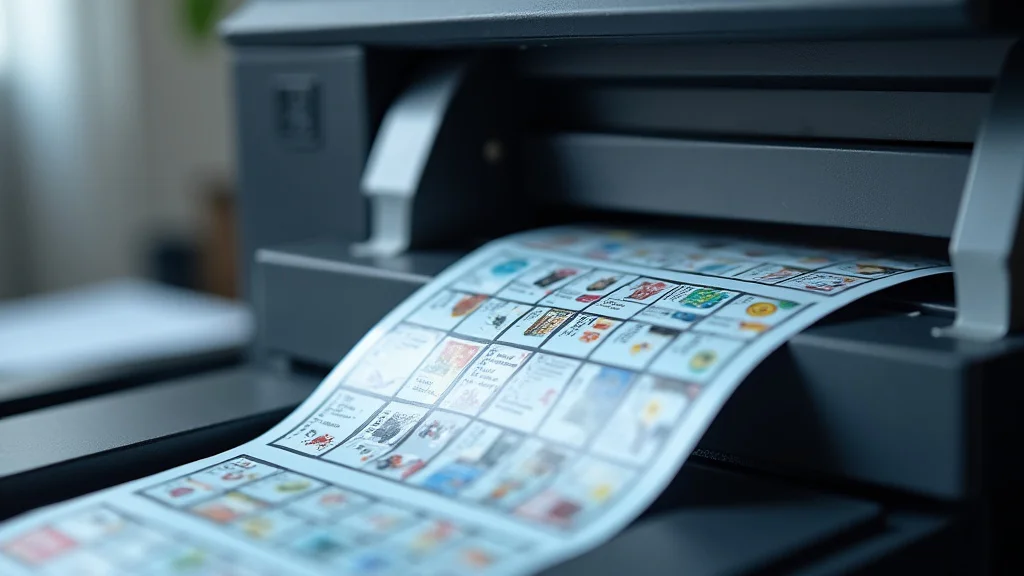
Ever walked into a store and been drawn to a product, solely because of its eye-catching label? Perhaps a vibrant sticker on a coffee bag, or a neatly printed label on a spice jar? I did. That’s the power of printing machine sticker labels. These seemingly simple pieces of adhesive can make or break a product’s appeal. This guide will help you understand the intricacies of printing machine sticker labels, from the materials used to the various printing methods. You’ll gain a deeper appreciation for their importance and learn how to make informed decisions for your business. This post will give you a clear advantage, increasing your knowledge and reducing your uncertainty.
Key Takeaways
- Learn the different materials used to produce printing machine sticker labels.
- Explore the diverse printing methods, and how they apply to specific uses.
- Understand the factors that influence the cost of sticker labels.
- Discover the best practices for designing effective sticker labels.
- Find out the most common uses for sticker labels across different industries.
- Understand how to maintain and care for your labels to extend their life.
Understanding Sticker Label Basics
Sticker labels are much more than just adhesive paper; they are an essential part of branding, marketing, and product information dissemination. They serve as the first point of contact between a product and the consumer, conveying crucial details such as brand identity, product descriptions, pricing, and regulatory information. The effectiveness of a sticker label hinges on several factors, including the material, adhesive type, printing method, and overall design. Choosing the right combination of these elements is important. This choice often impacts the lifespan, appearance, and suitability of the label for its intended environment.
Material Matters: Choosing the Right Label Stock
The material of a printing machine sticker label is the foundation upon which its functionality and longevity are built. Different materials are suited for diverse applications, each offering unique properties in terms of durability, water resistance, flexibility, and cost. Selecting the correct material is very important for the label’s performance in its specific environment. It dictates how the label will react to elements such as moisture, sunlight, temperature fluctuations, and abrasion. The choice of material affects not only the appearance and feel of the label but also how well it adheres to the product surface and how long it remains legible.
-
Paper Labels: Paper labels are a cost-effective solution, commonly used for indoor applications. They can be easily printed on and offer excellent print quality. However, they are not water-resistant, making them unsuitable for products exposed to moisture or extreme conditions. Paper labels are best for items with short lifespans and protected environments.
Paper labels are generally considered to be the most economical choice. Their affordability is due to the readily available raw materials and the ease with which they can be printed on using a variety of printing methods. This makes paper labels a popular choice for items that have a limited shelf life or are not required to withstand harsh environmental conditions. The smooth surface of paper also allows for detailed printing, making them suitable for applications where visual appeal is important.
-
Vinyl Labels: Vinyl labels offer superior durability and are water-resistant. They are ideal for products that may encounter moisture, sunlight, or chemicals. Vinyl is often the material of choice for outdoor applications or products used in environments where labels need to withstand wear and tear. Vinyl labels are strong and can endure a variety of conditions.
The robustness of vinyl labels comes from their synthetic composition. This material is made from polyvinyl chloride (PVC), a material that is not only waterproof but also resistant to tearing, stretching, and fading. Vinyl labels hold up well against harsh weather conditions and the effects of sunlight. This makes them a great option for labels used on products that are frequently handled, exposed to the elements, or in situations where durability is a primary concern. They are often applied to items such as outdoor equipment, industrial supplies, and products that need a long-lasting label.
-
Polypropylene (PP) Labels: PP labels are known for their flexibility and resistance to chemicals and moisture. They are often used for products like cosmetic containers and food packaging, where the label may come into contact with oils, solvents, or water. PP labels offer a balance of durability and cost-effectiveness. PP is known for its ability to resist damage from chemicals, making it ideal for the labeling of products that contain solvents or oils.
The versatility of polypropylene labels makes them appropriate for a wide variety of applications. They have excellent dimensional stability, meaning they resist stretching and shrinking, which is a key advantage for labels used on curved surfaces or containers. PP labels are also often used on products that have a short lifespan.
-
Polyester (PET) Labels: PET labels provide outstanding resistance to extreme temperatures, chemicals, and abrasion. They’re often used in industrial settings. PET labels are designed for harsh environments. They can withstand extensive temperature changes and are resistant to solvents, chemicals, and abrasion.
Polyester labels are designed for the most challenging environments. These labels are made from a strong, durable, and chemically resistant material that can endure extended exposure to extreme conditions. PET labels are often chosen for products that must be able to withstand industrial environments, prolonged exposure to sunlight, and contact with harsh chemicals or solvents. The material’s resilience ensures the label retains its legibility and integrity.
Adhesive Types: Choosing the Right Bond
The adhesive of a sticker label is as important as the material itself. It’s what ensures the label sticks firmly to the product and remains in place throughout its lifecycle. Several types of adhesives are available, each designed to perform best under specific conditions and on different surfaces. Choosing the correct adhesive is crucial for the label’s performance, ensuring it remains intact, legible, and functional throughout its expected lifespan. The adhesive choice directly affects the label’s ability to resist wear and tear, environmental factors, and attempts at tampering.
-
Permanent Adhesive: Permanent adhesives provide a strong, lasting bond, ideal for applications where the label must remain in place for an extended period. They are often used for product labels, shipping labels, and asset tags. Permanent adhesives are designed for a bond that lasts. They are ideal for applications where the label must stay attached to the product or surface throughout its use.
Permanent adhesives are commonly made of acrylic or rubber-based formulations. Once the label is applied, removal can be very difficult and often leaves adhesive residue behind. This type of adhesive is best used when a label needs to be tamper-evident or when durability is a key requirement. Examples include product labels on consumer goods, asset tracking labels, and labels that must endure exposure to harsh environments. Their strong bonding properties ensure they can withstand various conditions, including temperature changes, exposure to sunlight, and frequent handling.
-
Removable Adhesive: Removable adhesives allow labels to be removed cleanly, without leaving residue. They are ideal for temporary labeling, such as promotional stickers or price tags. This adhesive type is a good option when the label needs to be removed at a later time.
Removable adhesives are designed to provide a secure bond but still allow for easy removal. These adhesives are generally less aggressive than permanent adhesives, often allowing for easy peeling. The removability of these adhesives makes them appropriate for applications where labels need to be changed or updated frequently. Removable adhesive labels are common in retail settings, where price tags are regularly changed, or in promotional campaigns where stickers are applied and removed. They allow for label adjustments without the need for product damage.
-
Repositionable Adhesive: Repositionable adhesives allow labels to be peeled off and reapplied multiple times without losing their tackiness. They are useful for applications where the label might need to be adjusted or moved. This type of adhesive provides the flexibility to adjust or reposition the label.
Repositionable adhesives are a special class of adhesives, giving a moderate level of adhesion. This allows labels to be placed, removed, and reapplied multiple times while retaining their stickiness. Repositionable adhesives are useful for applications like temporary signage, educational materials, and decorative stickers, where the ability to easily adjust the label’s position is important. The adhesive formulation often includes specialized polymers that help maintain its tackiness over multiple uses.
Printing Methods for Sticker Labels
The printing method used to create printing machine sticker labels directly affects the quality, durability, and cost-effectiveness of the final product. Different methods are appropriate for various needs, from high-volume production runs to smaller, specialized orders. The choice of printing technique is impacted by various factors, including the type of material, the design complexity, the quantity of labels needed, and the budget. Each method has its own strengths and weaknesses.
Digital Printing
Digital printing is a versatile and increasingly popular method for producing sticker labels. It uses digital files to print directly onto the label material, eliminating the need for printing plates. This makes digital printing ideal for short runs, variable data printing, and personalized labels. It is well-suited for a wide range of applications. Digital printing is used for small production runs and on-demand printing.
-
Inkjet Printing: Inkjet printing is a digital method that uses tiny nozzles to spray ink onto the label material. It’s effective for printing full-color designs, photos, and variable data, and is often used for creating short runs and personalized labels.
Inkjet printing machines can print directly from digital files, eliminating the need for printing plates and making it cost-effective for short-run production. The process is particularly useful for labels that require variable data, such as product codes, serial numbers, or personalized messages. Inkjet technology offers excellent print quality and is appropriate for applications that require vibrant colors and intricate details. Inkjet printers are also suitable for a variety of label materials, including paper, vinyl, and polypropylene. The flexibility and ease of use of inkjet printing makes it a strong option.
-
Laser Printing: Laser printing uses a laser beam to create an image on a drum, which then transfers toner onto the label material. Laser printers are known for their speed and ability to produce high-resolution prints, making them appropriate for applications requiring high volumes and quick turnaround times.
Laser printing is well-suited for applications that need durable, high-quality prints and high-volume production. Laser printers can be faster than inkjet, which is a major advantage for large orders. Laser printing’s use of toner gives it a level of durability that makes it ideal for labels that must withstand friction, moisture, and fading. The ability to print sharp images and text makes laser printing a versatile choice.
Flexographic Printing
Flexographic printing is a widely used method for high-volume label production. It uses flexible printing plates to transfer ink onto the label material. This method is effective for printing on a variety of materials and is known for its speed and efficiency, making it the preferred choice for large-scale label production runs. Flexographic printing is suitable for long runs with a consistent design.
-
Process: The flexographic process begins with the creation of flexible printing plates. These plates are then mounted on a printing press. The press applies ink to the plates, which then transfer the ink onto the label material.
The flexibility of the printing plates allows this process to be used on a wide range of label materials, including paper, vinyl, and films. This method is very efficient, capable of printing high volumes of labels quickly and at a lower cost per label, making it perfect for mass production. This is often used for printing high-quality labels for food packaging, cosmetics, and other consumer products.
-
Advantages: Flexographic printing is known for its high speed, ability to handle various materials, and excellent print quality. It’s also cost-effective for large production runs. It is very versatile. It can print on a variety of substrates.
Flexographic printing offers several important advantages, including high-speed printing, which allows for very high production volumes. This method can print on a variety of materials, including flexible films, making it ideal for packaging labels. This method provides the option to print with a wide variety of inks, including those that are UV-resistant, and metallic inks. This allows for complex designs. This makes this printing method appropriate for a wide variety of uses.
Offset Printing
Offset printing, also known as lithography, is a printing method that uses inked images transferred from plates to a rubber blanket, which then transfers the images to the label material. This method offers high-quality printing, particularly for detailed images and vibrant colors, and is commonly used for producing high-end labels and marketing materials. Offset printing is a popular choice for high-quality, high-volume label projects.
-
High Quality: Offset printing produces high-resolution images and precise color reproduction, making it ideal for labels that require exceptional visual quality. The printing process ensures consistent and accurate color matching.
The offset printing process is well-suited for detailed images, fine text, and accurate color reproduction. This is achieved by transferring the image from the printing plate to a rubber blanket before transferring it to the label material. The use of a rubber blanket ensures the images are transferred with consistent quality and precision. This process also provides excellent control over color matching. Offset printing is often selected for the production of high-end labels, brochures, and other marketing materials where visual quality is very important.
-
Cost Efficiency: While the initial setup costs are higher, offset printing becomes more cost-effective for large-volume runs due to reduced per-unit costs. It is very effective for mass-production projects.
Offset printing has higher initial setup costs due to the creation of printing plates. However, once the setup is complete, the cost per unit decreases significantly as the production volume increases. The printing plates are able to produce large quantities of labels quickly, making offset printing more cost-effective for larger production runs. This method is used when large quantities of labels are needed. This is very cost-efficient for mass production.
Design Best Practices for Printing Machine Sticker Labels
Effective design is very important in the functionality of printing machine sticker labels. A well-designed label not only attracts attention but also clearly conveys essential information and reinforces brand identity. The design should align with the brand’s visual identity and be optimized for the specific product and its intended use. Understanding design elements like color, typography, layout, and imagery is key. Careful consideration of these elements ensures the label is both visually appealing and informative, helping it stand out in the marketplace.
Color and Typography
Color and typography are key elements in the visual impact of any label. Colors should be selected carefully to reflect the brand’s personality and to attract the target audience. Typography ensures that information is easy to read. Proper use of these elements ensures the label is both attractive and informative. The colors and typography are keys to label design.
-
Color Psychology: Use colors strategically to evoke emotions and convey the brand’s message. Bright colors attract attention, while more muted tones can convey sophistication or trustworthiness. The proper choice of colors has a large impact.
Different colors have different psychological effects, which can be leveraged to create a specific perception of a product or brand. For instance, using red can signify energy and excitement, making it perfect for food products. Blue often represents trust and reliability, which makes it good for financial products. Green often indicates health and sustainability, which is used for organic products. The label’s colors should be chosen based on the brand’s goals.
-
Typography and Readability: Choose fonts that are legible and appropriate for the product and the brand. Ensure that the text is easy to read, with adequate spacing and sizing. Good typography is key to readability.
The choice of typography is essential for the readability of the label. The font should match the brand’s image. Ensure the font size is large enough to be easily read from a distance and the spacing between letters, words, and lines is sufficient. The choice of font should also consider the label’s context. A classic and simple font might be perfect for a sophisticated product, while a bolder, more modern font might suit a more youthful product.
Layout and Imagery
The layout of a label determines how effectively information is communicated and how visually appealing it is. A well-designed layout guides the viewer’s eye and makes the label easy to scan. The use of images and graphics can reinforce the brand message and improve the overall design. Consider visual elements to make labels effective.
-
Visual Hierarchy: Arrange elements on the label in a way that guides the viewer’s eye. Use size, color, and placement to emphasize important information, such as the product name or key features. Good layout ensures key points are easily seen.
A visual hierarchy is established when arranging the elements in a way that guides the eye. This means using visual cues, such as the size, color, and placement, to show which information is most important. The product name, for instance, should be prominent. Secondary information, such as ingredients or instructions, should be clearly displayed but in a less prominent position. This way, the layout helps the viewer to quickly understand the most important information.
-
Imagery and Graphics: Use high-quality images and graphics that enhance the brand and communicate the product’s benefits. Ensure that images are relevant and visually appealing. Images and graphics can make labels very effective.
Using the right images is a powerful way to reinforce the brand message and boost a product’s appeal. The images must be of high quality and relevant to the product. A picture of the product itself, or an image that shows its use or benefits, can quickly catch the consumer’s eye. The style and tone of the images should match the brand’s identity. Using the right images is a powerful way to make your labels effective.
Applications of Printing Machine Sticker Labels
Printing machine sticker labels have a broad range of uses. They are essential across almost all industries. The applications include product labeling, marketing, packaging, and informational displays. From product identification to regulatory compliance, the versatility of sticker labels makes them a versatile part of any business. The usefulness of sticker labels is very important for many different businesses.
Product Labeling and Branding
Product labeling and branding are primary applications for printing machine sticker labels. Labels identify the product, convey its brand identity, and provide essential product information. They help build brand recognition. This includes the product’s name, ingredients, instructions for use, and any required warnings or certifications. Product labeling is very important in the consumer world.
-
Product Identification: Labels are fundamental for identifying products on shelves, in warehouses, and during shipping. They help prevent errors and ensure accurate product delivery. Labels are used to quickly identify products.
Product identification labels are designed to provide a quick and easy way to identify the product. This includes the product name, SKU (Stock Keeping Unit) code, and, for example, a barcode. The information should be clear, easy to read, and positioned for quick scanning or visual inspection. For manufacturers, these labels are essential for tracking inventory, managing supply chains, and reducing errors in the fulfillment process. The proper use of identification labels helps maintain efficient operations.
-
Branding and Marketing: Labels serve as a primary branding tool, helping to create brand recognition and attract customers. They display the brand’s logo, colors, and design elements. This helps build brand recognition.
Labels are important in marketing. They use the brand’s logo, colors, and design elements to build brand recognition and create a memorable product presentation. A well-designed label makes a strong first impression. In a crowded marketplace, the brand’s visual identity should make the product stand out. This is very important to attract consumers and build brand loyalty. The label needs to quickly convey the brand’s values and personality.
Packaging and Shipping
Printing machine sticker labels play an important part in the packaging and shipping processes. They facilitate the delivery of products to their final destinations. Labels include shipping addresses, handling instructions, and barcode scanning data. They provide a quick and effective way to manage and track packages. Packaging labels are important for the shipping process.
-
Shipping Labels: Shipping labels are used to provide essential information for shipping and delivery, including the recipient’s address, the sender’s information, and tracking details. They enable products to reach their destination. Shipping labels are used to correctly deliver packages.
Shipping labels are a necessary component of the shipping process. The labels must clearly display the recipient’s name, address, and contact information. These labels will also include the sender’s details and any necessary tracking information, such as barcodes or QR codes. These details enable logistics companies to effectively manage and deliver packages. The information is often standardized to allow for automated scanning and processing. The labels must be durable and resistant to environmental factors like moisture and handling. These details must be designed to withstand shipping.
-
Packaging Labels: Packaging labels provide product information, handling instructions, and any necessary warnings. They ensure the product is properly handled during shipping and meets regulatory requirements. Packaging labels offer essential information about products.
Packaging labels play a significant role in making sure the product is handled properly and meets all regulatory requirements. These labels can provide instructions for opening and using the product. They may also include safety warnings, as well as information on materials. Proper packaging labels make sure the product reaches the consumer safely and that they are given essential information.
Informational and Promotional Labels
Informational and promotional labels are used to provide customers with details about a product. These labels can promote the product, provide special offers, or relay important product facts. They are designed to engage consumers and impact purchasing choices. Informational and promotional labels are used to share special information.
-
Promotional Labels: Promotional labels are used to announce special offers, discounts, or contests. They often include eye-catching graphics and messaging to attract customers and boost sales. They attract customers and boost sales.
Promotional labels are an essential part of marketing. They are designed to attract attention and encourage consumers to buy the product. These labels often feature bright colors, bold text, and images. They might be used for limited-time offers, discounts, or special promotions. They can be found on products in stores, or they can be attached to packaging. These labels are important for helping to increase product visibility and boost sales. The use of promotional labels is a simple way to increase sales.
-
Informational Labels: Informational labels provide detailed information about a product, including its ingredients, nutritional information, and usage instructions. They also provide information about the product’s benefits. These labels help consumers make informed purchase decisions.
Informational labels provide important details to help customers make informed purchase decisions. These labels often include information like ingredients, nutritional facts, and instructions for use. They might also share information on product safety. This helps consumers to understand what they are buying. Providing comprehensive and easy-to-understand information improves the consumer’s trust in the brand. This is very important for regulatory compliance and transparency.
Maintenance and Care of Printing Machine Sticker Labels
The lifespan of a printing machine sticker label relies heavily on proper maintenance and care. The environment to which a label is exposed, its application, and how it is handled all affect its durability and legibility. Following some simple guidelines will ensure the labels stay intact. Proper maintenance increases the durability and legibility of a label. These practices include proper storage and application. This will extend the life of your printed labels.
Storage and Handling
Appropriate storage and handling are very important to protect the label material and its adhesive from environmental factors. The goal is to preserve the label’s integrity and effectiveness until it is applied to the product. Improper storage and handling can lead to degradation or damage of the labels. These actions can affect how well the labels will adhere to the product. Proper handling preserves the labels.
-
Storage Conditions: Store labels in a cool, dry place. Avoid direct sunlight and extreme temperatures, which can damage the adhesive and the label material. Proper storage protects labels from damage.
Correct storage conditions are very important for maintaining the quality of sticker labels. Labels should be stored in a cool, dry area that is away from direct sunlight, which can cause the label material and the adhesive to degrade. Temperature changes can affect the label’s dimensional stability. Proper storage can keep the labels from curling, cracking, or becoming less effective. The right conditions are key to extending the life of your label inventory.
-
Handling Procedures: Handle labels carefully to avoid damage, such as scratches or creases. Keep them clean and dry. Make sure they are correctly handled.
Proper handling is important in preserving the physical appearance and function of sticker labels. The labels should be handled with clean, dry hands to avoid getting dirt or oil on the adhesive side. When applying the labels, handle them gently to prevent damage like scratches or creases. Proper handling preserves the label’s visual appeal and adhesive properties. By properly handling labels, businesses can improve product presentation.
Application and Environmental Considerations
How the printing machine sticker labels are applied and the environment they are exposed to has a big impact on their durability. Correct application and knowledge of the conditions the label will endure can greatly extend its lifespan. Understanding the environmental factors helps in selecting the appropriate label material and adhesive. Proper application and the right material will ensure the label will perform as needed.
-
Surface Preparation: Before applying a label, clean the surface thoroughly to remove any dirt, dust, or oil. This will improve adhesion. A clean surface is key for good adhesion.
Before applying a label, you must ensure that the surface is clean, dry, and free of any contaminants. Use a cleaning agent to remove any dirt, dust, oil, or other residue that could affect the adhesive’s effectiveness. The surface preparation ensures a strong bond. Preparation extends the label’s lifespan. Cleaning the surface is a crucial step.
-
Environmental Factors: Consider the environment in which the label will be used, including exposure to moisture, sunlight, or extreme temperatures. Select a label material and adhesive appropriate for the conditions. Choosing the correct material is very important.
When selecting a sticker label, it is important to think about the conditions it will be exposed to. A label for an outdoor product needs to be water-resistant, durable, and resistant to UV rays. Labels for products stored in freezers must withstand very low temperatures. Labels exposed to chemicals must be made from chemical-resistant materials. The correct material choice will guarantee that the label remains intact. This guarantees legibility and functionality.
Common Myths Debunked
Myth 1: All sticker labels are the same.
In reality, sticker labels vary widely in their material, adhesive type, and printing method. Choosing the correct label depends on the application, the environment, and the needs of the product. The key is to match the label’s properties to the specific requirements.
Myth 2: More expensive labels are always better.
Expensive labels aren’t necessarily the best choice for every application. The “best” label is one that matches the specific needs of your product and its environment, regardless of cost. The right label is one that meets the need.
Myth 3: All label materials are waterproof.
Only some label materials are waterproof. Paper labels, for instance, are not waterproof and are suitable for indoor use. Vinyl and polypropylene are waterproof and appropriate for products exposed to moisture.
Myth 4: Design doesn’t matter as long as the label sticks.
The design of a label is very important for how the brand is viewed and how much attention the label attracts. A well-designed label enhances brand recognition. It also makes it easier for the consumer to understand the product.
Myth 5: It’s fine to use any adhesive for all applications.
The type of adhesive used must be selected based on the label’s use. Permanent adhesives work well for long-term applications, while removable adhesives are for short-term and temporary use. The adhesive must be carefully chosen for the product and the environment.
Frequently Asked Questions
Question: What’s the difference between a sticker and a label?
Answer: The terms are often used interchangeably, but generally, labels are designed for product information, while stickers can be used for branding or decoration.
Question: How do I choose the right label material?
Answer: Choose the material based on the environment your label will be in, considering moisture, temperature, and wear. Also, think about the product’s lifespan.
Question: What does “variable data printing” mean?
Answer: It means printing labels with information that changes, like serial numbers, dates, or personalized messages.
Question: How can I ensure my labels are durable?
Answer: Select durable materials, apply the labels to a clean surface, and store the labels correctly to prevent damage.
Question: Are there any eco-friendly label options?
Answer: Yes, you can choose from eco-friendly options. Recycled paper, biodegradable materials, and water-based adhesives are often used.
Final Thoughts
Printing machine sticker labels are a blend of art and science. They must be designed to enhance the brand and communicate essential information clearly. The choices involve selecting the appropriate material, choosing the right printing method, and designing the label. Every element works together to create an effective label. By keeping these elements in mind, you can create labels that attract consumers. Always choose the right combination of materials, printing methods, and designs. You can create labels that boost your brand. You can make labels that tell your story and capture the attention of your customers.