Remember that time you tried to order a custom-designed item, only to realize the final product wasn’t quite what you expected? Maybe the colors were off, or the size was wrong. Similarly, when it comes to printing a whistle, a little know-how can make a big difference. This guide explores the process in detail, ensuring you get the perfect result. By exploring the nuances of printing a whistle, you’ll gain practical knowledge that helps you avoid common pitfalls and achieve superior results. You’ll also learn tips and tricks to optimize your design and printer settings, increasing your confidence and project outcome.
Key Takeaways
- Understanding the different methods used for printing a whistle.
- Learning about the materials best suited for whistle production.
- Exploring the design considerations critical for a functional whistle.
- Discovering troubleshooting tips for common printing problems.
- Optimizing your printer settings for the best possible print quality.
- Gaining insight into the uses and applications of 3D-printed whistles.
Methods of Producing a Whistle
The manufacturing process to produce a whistle, from a simple pea whistle to a complex, multi-component design, relies on several different approaches, each offering unique advantages and suitable for different scales of production and levels of detail. These methods have evolved over time and use a combination of old and modern techniques. Selecting the most effective method depends on many considerations, including the intended purpose of the whistle, desired materials, and the number of whistles required.
3D Printing: A Modern Approach
3D printing, also known as additive manufacturing, is revolutionizing how we create objects, including whistles. This method builds objects layer by layer from a digital design. This makes 3D printing ideal for complex shapes and customized whistles that might be difficult or impossible to create using traditional methods. Several 3D printing technologies exist, each employing a different process to construct the object. These include Fused Deposition Modeling (FDM), Stereolithography (SLA), and Selective Laser Sintering (SLS), each offering various benefits.
- FDM (Fused Deposition Modeling): This method uses a heated nozzle to deposit molten plastic, building the whistle layer by layer. FDM is a cost-effective choice for basic whistle designs, especially for beginners. The downside is that the print quality and detail aren’t as fine as other methods.
- SLA (Stereolithography): SLA uses a laser to cure liquid resin into solid layers, providing high precision and smooth surfaces. This is a good option if you want to print whistles with intricate details and smooth surfaces. However, the materials used are usually more expensive.
- SLS (Selective Laser Sintering): SLS uses a laser to fuse powdered materials, typically nylon, into a solid form. This process can produce sturdy whistles, including those with moving parts or complex internal features. SLS offers versatility in materials and excellent durability, but the equipment is often more expensive.
Using this process, the plastic filament is fed through a heated nozzle and deposited onto a build platform. This layer-by-layer process means you can create intricate designs. However, the layer lines are often visible, and the surface finish might require post-processing like sanding or smoothing. An advantage of FDM is the wide range of available materials, including PLA, ABS, and PETG. Each has different properties, such as flexibility, strength, and heat resistance.
SLA uses a liquid resin that is selectively hardened by a laser, solidifying the object layer by layer. The resulting prints have a high degree of detail and a smooth finish, making them suitable for producing complex whistle designs. The process involves post-curing to fully harden the resin and ensure its durability. SLA can be the better option when precise dimensions and smooth finishes are critical. These whistles often require less finishing work.
SLS works by using a laser to fuse small particles of a powder, typically nylon, together to create a solid object. The powder is spread in thin layers, and the laser selectively melts and fuses the powder particles according to the digital design. SLS is particularly useful for producing whistles that need to be durable and able to withstand wear and tear. One of the main benefits is that the unfused powder supports the print, so complex geometries, including moving parts, can be made without support structures. After the printing process, the whistles go through a cleaning process to remove the excess powder.
Traditional Manufacturing Techniques
Prior to the adoption of 3D printing, whistles were primarily made using traditional methods. These techniques are still relevant, particularly for mass production and specific material requirements. These methods, while less flexible in terms of design customization, are proven and efficient when manufacturing large quantities.
- Injection Molding: This process is a common technique for mass production. Molten plastic is injected into a mold, and once cooled, the mold is removed, leaving the whistle. Injection molding is perfect for high-volume manufacturing, offering consistency and cost-effectiveness.
- Metal Casting: Metal whistles are made by pouring molten metal into a mold. Once cooled, the whistle is removed and may be finished to add details or polish the surface. This technique produces durable whistles, often used in professional or industrial settings.
- Machining: Machining involves removing material from a solid block using tools like lathes and milling machines. This process allows for intricate designs and precise dimensions. Machining is well-suited for whistles that require high precision or are made from specialized materials.
Injection molding can be done with a wide variety of plastic materials, making the whistle production a very versatile process. The molds need to be designed specifically for the whistle. This can add a cost upfront. The process is cost-effective when manufacturing very high quantities. The whistles created using injection molding are uniform and consistent in design and quality.
Metal casting can use various metals such as brass, aluminum, or steel, each offering different characteristics. The molds can be made of sand, investment casting, or die casting, depending on the complexity of the design and the required accuracy. Cast metal whistles are known for their longevity and the high-quality sound they produce. This method is used when the requirements include durability and a high-end finish. The upfront costs for creating molds can be high, but the cost per unit decreases with larger production runs.
Machining offers incredible precision, making it great for complex or very detailed whistle designs. Materials like metals and high-strength plastics can be used. Machining may be a good choice for producing small batches of specialized or custom whistles, or for prototypes. This method has a slower production rate when compared to mass-production techniques, and the cost can be high, especially for intricate designs.
Materials Used in Printing Whistles
The choice of material is crucial to the success of printing a whistle, impacting its durability, sound quality, and the ability of the design to be created. Different materials offer unique benefits, and the best selection will depend on the intended use of the whistle. Material selection also influences the printing process itself. Properties such as shrinkage, layer adhesion, and the level of detail that can be achieved are all affected by material choice.
Plastic Filaments for FDM
For FDM printing, various plastic filaments are available, each offering a specific combination of properties suitable for different applications. These materials have become popular due to their ease of use, wide availability, and cost-effectiveness. When choosing a filament, the following aspects must be taken into account: the desired appearance, strength, flexibility, and heat resistance.
- PLA (Polylactic Acid): PLA is a popular choice for beginners due to its ease of printing and is made from renewable resources, making it an eco-friendly option. This material is easy to print, with minimal warping.
- ABS (Acrylonitrile Butadiene Styrene): ABS is a robust plastic, offering higher strength and temperature resistance than PLA. It is suitable for creating whistles that will be used outdoors or in environments with high temperatures. This is a common choice for functional parts.
- PETG (Polyethylene Terephthalate Glycol-modified): PETG offers a good balance of properties, combining the ease of printing of PLA with the durability of ABS. It is strong, flexible, and can withstand higher temperatures compared to PLA. This is a versatile option for several different whistle types.
PLA has low warping, so it is well-suited for many designs. It is available in many colors and finishes. The downsides of PLA include lower heat resistance compared to other filaments, making it unsuitable for applications that will be exposed to high temperatures. It also has less impact resistance and is more brittle. PLA is often the preferred choice for prototypes and display models.
ABS is more resistant to heat and wear than PLA, making it useful in various applications where durability is key. ABS requires a higher printing temperature and may require a heated bed to prevent warping. It is a bit more challenging to print than PLA, but its strength and durability make it a good option. The fumes produced during printing may also require adequate ventilation.
PETG has good layer adhesion and is less prone to warping compared to ABS. It offers good chemical resistance. Its transparency is also useful for designs where the internal structure should be visible. While PETG has good overall characteristics, it does tend to absorb moisture from the air, which can affect the quality of prints if not stored properly.
Resin for SLA and DLP Printing
SLA and DLP printing often use liquid resins that cure when exposed to light, resulting in very precise and detailed prints. The selection of resin significantly influences the properties of the printed whistle. Different types of resins offer varying levels of detail, durability, and resistance to environmental factors.
- Standard Resin: Standard resins are commonly used in SLA and DLP printers and are generally the most cost-effective option. Standard resins are suitable for general-purpose applications that require good detail.
- Tough Resin: Tough resins are designed to offer increased durability and flexibility compared to standard resins. They are suitable for creating whistles that will experience stress or impact.
- Flexible Resin: Flexible resins offer high flexibility, allowing them to bend and flex without breaking. They are well-suited for whistles that require flexible parts, such as those with moving components.
Standard resins produce prints with a high level of detail, making them ideal for whistles with complex designs. However, they are often brittle and may not withstand impacts or exposure to UV light over extended periods. Standard resin is suitable for prototypes or whistles that will not be subjected to harsh conditions.
Tough resins are formulated to mimic the properties of ABS or other durable plastics, providing better resistance to breaking and cracking. They are a good choice when the whistle is expected to withstand handling, drops, or impacts. While tough resins improve durability, they may slightly reduce the level of detail compared to standard resins.
Flexible resins are useful for creating parts that should flex without damage. These resins can be used to make components like the pea inside a whistle or parts that require a flexible fit. They are typically more difficult to print than standard or tough resins, requiring careful calibration of the printing parameters. These can be the most durable choices for specific applications.
Powders for SLS Printing
SLS printing utilizes powdered materials, which are fused together using a laser. Nylon is the most frequently used material. Nylon is valued for its durability, flexibility, and resistance to impact. It is well-suited for functional whistles.
- Nylon 12: Nylon 12, also known as Polyamide 12, is a popular choice for SLS printing due to its excellent mechanical properties. It offers a good balance of strength, flexibility, and chemical resistance.
- Nylon 11: Nylon 11 is another excellent material for SLS printing. It offers similar properties to Nylon 12 but often has better flexibility and impact resistance.
Nylon 12 is well-suited for whistles designed to endure harsh conditions. It is resistant to a wide range of chemicals and can withstand high impacts. Nylon 12 prints often have a slightly rough surface finish that may need post-processing like bead blasting or dyeing to improve the look.
Nylon 11 is used when greater flexibility is needed. It is a good option when creating whistles intended to be used in environments with significant temperature changes. It has similar post-processing requirements to Nylon 12. Nylon 11 is a strong and durable material suitable for functional and robust whistle designs.
Design Considerations for a Functional Whistle
The design of a whistle is critical to its performance. The sound produced by a whistle depends on various factors, including its internal geometry, chamber size, and the shape of the sound hole. It is essential to ensure that the design considerations are appropriately addressed to create a functional whistle that produces the desired sound.
The Anatomy of a Whistle
The different components are essential to ensure the printing whistle is functional. Understanding the specific components helps to create a design that produces a clear and strong sound. Each part plays a vital role in directing and amplifying the air flow.
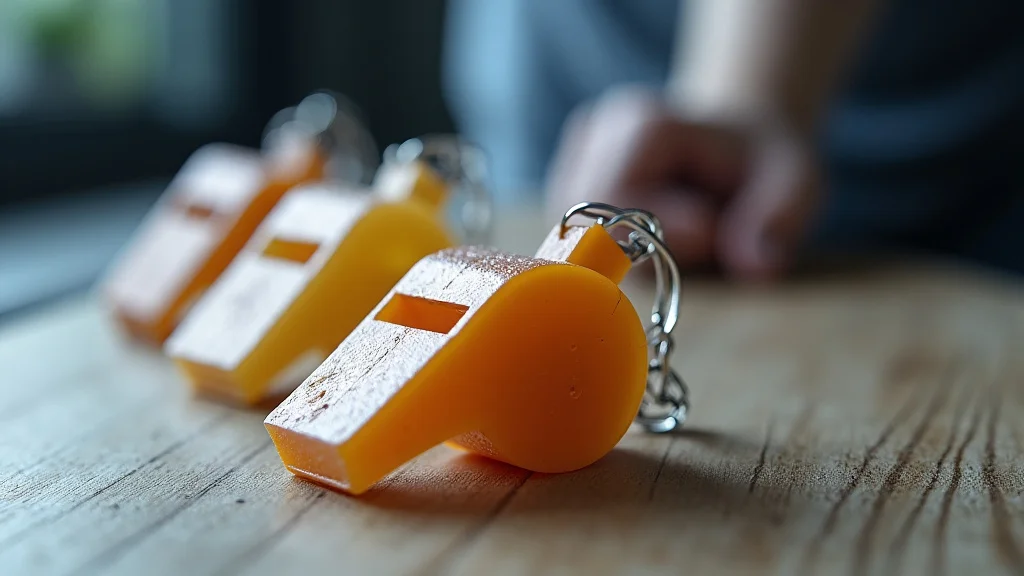
- The Chamber: The chamber is the main body of the whistle, where the sound is produced. Its size and shape influence the whistle’s pitch and volume. A larger chamber generally produces a lower pitch.
- The Fipple: The fipple is the mouthpiece of the whistle, which directs the airflow over the blade. The fipple’s shape and dimensions are important for creating a consistent air stream.
- The Blade: The blade is the edge that the airflow strikes to create sound. Its position relative to the fipple and the chamber dimensions influence the sound’s characteristics.
- The Sound Hole: The sound hole is the opening through which the sound waves exit the whistle. Its size and location influence the pitch and volume of the sound produced.
The chamber dimensions significantly impact the acoustic properties of the whistle. It should be designed to allow the air to vibrate freely. The shape can be cylindrical, conical, or even more complex. The size of the chamber helps determine the resonance frequency and the volume. Proper design and dimensions are critical to produce a clear sound.
The fipple’s precise design affects the efficiency of the sound production. The dimensions of the fipple slot determine the air velocity and how the air strikes the blade. The shape of the fipple itself can be flat, rounded, or have an angled design. These variations influence the sound quality. Precise design is crucial to generate a clear and focused sound.
The blade’s position and shape are crucial for creating vibrations, which generate sound. The design should direct the airflow efficiently to create the most effective vibrations. The sharpness and position of the blade must be optimized to ensure proper airflow and the desired sound profile. The blade should be made of the same material as the whistle.
The size and shape of the sound hole greatly influence the sound projection and pitch of the whistle. Positioning of the sound hole also affects how the sound waves are directed. Changing the sound hole can change the sound characteristics. The dimensions must be carefully calculated and precisely designed to produce the desired result.
Design Software and Considerations
Before printing a whistle, appropriate software must be used to create the digital model. The design stage involves selecting the specific software for a whistle design and considering the optimal dimensions for various parts. The design tools have become very advanced, making it simple to test out and alter different design characteristics.
- CAD Software: CAD (Computer-Aided Design) software is used to create the 3D model of the whistle. Popular options include TinkerCAD, Fusion 360, and Blender.
- Sizing and Dimensions: Careful attention to the internal dimensions of the whistle is critical for sound production. The size of the chamber, fipple, blade, and sound hole directly impacts the pitch and volume of the sound.
- Wall Thickness and Structural Integrity: The wall thickness of the whistle is critical for its durability. The design must have structural integrity, especially when 3D printing, where the layer-by-layer build can create weaknesses.
CAD software is useful for designing the whistle’s internal structure and external dimensions. These programs allow you to modify dimensions, add features, and optimize the design for printing. The selection of CAD software depends on your experience level and the desired complexity of the design. Free software, like TinkerCAD, is good for beginners. More sophisticated tools, like Fusion 360, are appropriate for more advanced projects.
It’s important to experiment with the dimensions to refine the sound quality. The ratio of the chamber to the other parts impacts the tonal characteristics. Using a sound-modeling application can assist in finding the optimum measurements for a specific tone. Making adjustments to your design will impact the acoustic performance of the whistle. Careful dimensioning is essential.
The wall thickness of the whistle should be sufficient to prevent cracking or deformation. Consider the material’s properties and the potential stresses the whistle will endure. Adding features like internal supports, ribs, or thickened sections can improve structural integrity without adding to the weight of the whistle. Properly planning the wall thickness will ensure the whistle’s strength and longevity.
Troubleshooting Common Printing Problems
Several issues can occur when printing a whistle, which can affect the final result. Many problems can be fixed by understanding the cause and adjusting settings. Recognizing the potential issues and knowing how to fix them can help with troubleshooting.
Common Printing Errors
Identifying common printing issues and understanding how to fix them can save time and materials. By fixing these errors, you can ensure a successful print. Troubleshooting problems quickly can help ensure a high-quality finished product.
- Warping: Warping occurs when the corners or edges of the print lift off the build plate, often caused by uneven cooling.
- Stringing: Stringing happens when thin strands of filament are left on the print, particularly in open spaces. This is caused by the extruder oozing material while traveling.
- Poor Layer Adhesion: Poor layer adhesion results in the layers of the print not bonding properly, resulting in a weak or failed print. This is often caused by the low temperature or poor material flow.
Warping is typically associated with temperature differences. It is essential to ensure that the build plate is properly leveled and heated. Using a heated bed can help prevent warping. Adhesion can be improved by applying a layer of adhesive such as glue stick or painter’s tape to the build plate. Choosing the correct print temperature will reduce the chance of warping.
Stringing is often fixed by optimizing retraction settings. Adjust the retraction distance and speed to pull the filament back into the nozzle while traveling. Lowering the printing temperature slightly can also help to reduce stringing. Cleaning up the stringing can be achieved through post-processing steps such as carefully using a heat gun or trimming with a hobby knife.
Poor layer adhesion occurs when the layers of the printed part do not bind effectively. Increasing the nozzle temperature can increase layer adhesion. Ensuring that the printer is correctly calibrated and that the nozzle is the correct distance from the build plate can help. A small increase in print speed can sometimes improve adhesion by reducing the time for the material to cool between layers.
Printer Settings and Adjustments
Making the right settings adjustments can fix common printing errors and optimize the quality of your whistle. Understanding printer settings, such as temperature, speed, and support structures, is key to successful printing.
- Temperature: The correct printing temperature is crucial for the material’s performance. The temperature should be suitable for the filament and the specific printer.
- Print Speed: Print speed impacts the print quality and the time it takes to print a part. The right speed is a balance of these two factors.
- Support Structures: Support structures are essential for designs with overhangs or complex geometries, such as a whistle. These structures are used to prop up the overhanging parts.
The optimal printing temperature varies depending on the material you use. Refer to the manufacturer’s recommendations for the correct temperature range. If the temperature is too low, the filament might not bond properly, resulting in poor layer adhesion. If the temperature is too high, the filament may melt excessively, causing stringing and other imperfections. Fine-tuning the printing temperature will optimize the result.
Slower print speeds generally result in higher print quality, particularly for intricate details. However, it will take more time to print the part. High speeds can cause issues like poor layer adhesion, stringing, and inaccurate dimensions. The print speed must be optimized to your specific design, material, and printer setup. Generally, printing small parts like whistles works well at speeds between 40-60 mm/s.
The support structure will ensure that the printing is successful by preventing the overhangs from drooping. These structures are placed strategically to hold up the overhanging areas. The type and density of the supports can influence the print quality and the ease of removal after printing. The supports must be carefully placed to provide enough support but also to make them easy to remove without damaging the print.
Applications of 3D-Printed Whistles
The flexibility and customization provided by 3D printing make it ideal for producing whistles with a variety of applications. 3D-printed whistles are used in many different fields, from sports to education, because of their unique advantages.
Specific Use Cases
3D-printed whistles have several advantages, which makes them useful in several applications. Their durability, customization, and cost-effectiveness make them ideal for many uses.
- Sports and Recreation: 3D-printed whistles are great for sports. This allows for creating whistles that are customized for particular sports.
- Safety and Emergency: 3D-printed whistles offer a durable, cost-effective option for safety applications. Whistles are easy to carry and provide an immediate signaling tool in emergency situations.
- Educational Tools: 3D-printed whistles offer unique learning opportunities for students of all ages. This allows for experimentation and learning about sound and design concepts.
Coaches, referees, and participants in different sports can use 3D-printed whistles. Whistles can be designed with special features, such as improved sound projection or ergonomic designs for comfortable use. The customization ability is very useful for sports. Durable materials and creative design allow for specialized whistles to meet any requirements.
3D-printed whistles are very useful for outdoor activities, such as hiking or camping, where signaling for help is vital. Whistles can be designed to withstand harsh weather conditions and be easy to identify. High-visibility colors can be used to improve safety. These whistles are easily produced on demand.
3D-printed whistles offer a hands-on way to teach principles of sound engineering. Students can learn the impact of chamber shape, the design of the mouthpiece, and sound hole placement. The teaching possibilities are expanded when you can build multiple versions of whistles to compare results. This type of learning provides engaging and valuable educational experiences.
Customization and Personalization
The flexibility of 3D printing provides personalization. This can include anything from color choices to adding custom features. The ability to customize the design makes 3D-printed whistles unique and tailored to an individual’s requirements.
- Custom Designs: 3D printing enables the creation of custom-designed whistles, meeting particular aesthetic or functional requirements. This results in uniquely designed whistles.
- Color and Material Options: 3D printing offers a wide array of color choices and materials to create a custom whistle. This also allows for customization.
- Ergonomic Features: 3D printing can be used to customize whistles. This includes adjusting the shape to fit the user’s hand, increasing the comfort and usability of the whistle.
Customization provides design options like special shapes, textures, and personalized text or graphics. Whistles can be customized for specific users, such as including a name or a team logo. The flexibility of 3D printing makes it perfect for custom projects. The user can create exactly what is needed.
The broad range of materials and colors lets you choose the perfect appearance and functionality. You can select materials to match the expected wear and weather conditions. Using bright colors can improve the safety of the whistles in emergencies. This level of control makes it simple to produce customized whistles.
Ergonomic whistles are designed for a comfortable grip and ease of use. Designs are made to improve user comfort and reduce the risk of strain during prolonged use. The handle and mouthpiece can be customized to suit different hand sizes and preferred grip styles. This improves the overall experience of using the whistle, especially during frequent use.
Common Myths Debunked
Myth 1: All 3D-Printed Whistles Sound the Same.
Reality: The sound of a 3D-printed whistle depends heavily on the design and printing parameters. The size and shape of the chamber, fipple, blade, and sound hole, in addition to material choice and printing settings, all affect the pitch and volume.
Myth 2: 3D-Printed Whistles Are Not Durable.
Reality: The durability of a 3D-printed whistle depends on the chosen material and the printing quality. High-quality materials like ABS, PETG, and Nylon, when printed properly, can be incredibly durable, resisting impact and wear.
Myth 3: 3D Printing is Too Complicated for Whistle Creation.
Reality: While advanced designs can be complex, many user-friendly design software options make it accessible. With the right tools and a little practice, anyone can create and print a functional whistle.
Myth 4: Metal Whistles Always Sound Better Than 3D-Printed Whistles.
Reality: Metal whistles have a good reputation for producing excellent sound quality and are very durable. However, properly designed and printed whistles with the correct materials can achieve comparable or even superior sound quality. The design and dimensions are more important than the material.
Myth 5: It’s Difficult to Troubleshoot Printing Whistles.
Reality: While it can take a bit of work, troubleshooting is not that difficult. Problems like warping, stringing, and poor layer adhesion can usually be solved by adjusting printing settings or design features. Online resources and communities offer extensive support.
Frequently Asked Questions
Question: What is the best material for a whistle?
Answer: The best material depends on your specific needs. PLA is good for easy printing, while ABS offers better durability. Nylon is great for functional whistles.
Question: How do I choose the right printer settings for a whistle?
Answer: Start with the manufacturer’s recommendations for your chosen filament. Then, fine-tune temperature, print speed, and support structures based on the specific design.
Question: How can I improve the sound of my whistle?
Answer: Experiment with the internal dimensions of the chamber, fipple, blade, and sound hole. Also, change the printing parameters, and the material.
Question: Is it difficult to design a whistle?
Answer: The design can be done with easy-to-use software. With a little practice, anyone can design a functional whistle.
Question: How can I fix stringing on my 3D-printed whistle?
Answer: Adjust the retraction settings. Try slightly lowering the printing temperature.
Final Thoughts
Printing a whistle can be a rewarding project, combining creativity with technical skill. You’ve discovered how various manufacturing processes, from 3D printing to traditional methods, bring these functional objects to life. You’ve explored the significance of material selection, including plastic filaments, resins, and powdered materials, to create whistles with optimal properties. The art of whistle design, the anatomy of sound production, and the importance of structural integrity are very key. You now have the skills to handle potential printing errors and optimize your printer settings. Whether you are creating a whistle for sports, safety, or education, the potential is vast. Now, explore this knowledge. Start designing, printing, and experimenting to create your own sounds and designs!