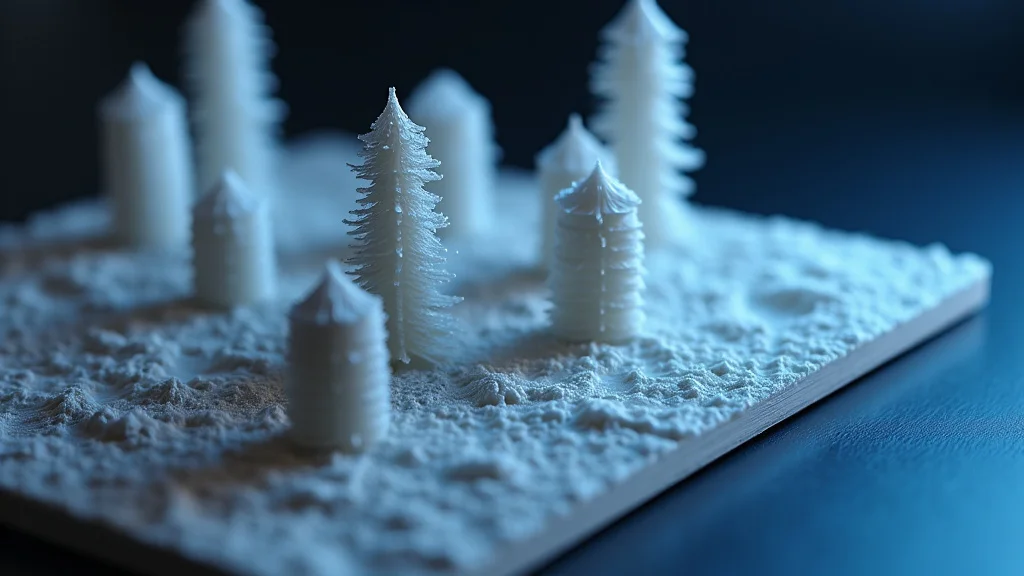
Imagine building a model airplane, but instead of gluing it together, a machine prints it, layer by layer, in a single go. Now, imagine that machine can also move in five dimensions, allowing it to create incredibly complex shapes. That’s the power of 5D printing software. This post will explore how this cutting-edge technology works and its potential impact. You will learn about the different types of software available, their functionalities, and their practical applications. Prepare to discover how 5D printing software is changing industries and what it means for the future of design and manufacturing.
Key Takeaways
- 5D printing software allows for the creation of objects with intricate geometries.
- The software controls the movement of the printer in five dimensions, increasing design possibilities.
- Several types of 5D printing software cater to different design requirements.
- Specific software packages offer functionalities for design optimization and simulation.
- Different industries utilize 5D printing software for prototyping, manufacturing, and innovation.
- You can better grasp the trends and future directions of 5D printing software.
Understanding 5D Printing and Its Software
Traditional 3D printing operates in three dimensions: length, width, and height. 5D printing goes beyond this by adding two more dimensions of movement, allowing the print head (or the object itself) to rotate and move along multiple axes simultaneously. This enhanced movement capability opens doors to creating parts and objects that were previously impossible to produce using conventional methods. The software is the brain behind this technology, precisely coordinating all of these movements and actions.
The Core Principles of 5D Printing
5D printing software is an essential component, offering a unique approach to manufacturing. It involves layering materials in a way that allows for complex shapes. It enables printing along curved surfaces and manipulating the angle of the print head. This process allows for more complex, organic shapes. The software provides the necessary programming and control that makes this possible. The process begins with a digital model, which the software then processes into instructions. These instructions guide the printer’s movements and material deposition. This results in the construction of the final object.
- Motion Control: 5D printers have multiple axes of movement (typically five). The software precisely controls each axis. This allows for the print head or the platform to move and rotate, creating complex geometries. For instance, the print head might rotate while depositing material, enabling the creation of overhanging structures without the need for support material.
- Material Deposition: The software dictates where and how the printing material is deposited. This could be plastic, metal, ceramics, or other materials. For each layer, the software calculates the optimal path. This ensures that the material is deposited correctly. The deposition process varies based on the type of material and printer.
- Design and Slicing: Before printing, a 3D model must be created. The software then “slices” this model into layers. Each layer represents a thin cross-section of the object. The software generates the toolpaths for the printer, determining the path of the print head. It handles the deposition of material for each layer. The design process can be achieved with several tools.
- Support Structure Generation: Sometimes, overhanging parts require support structures to prevent collapse during printing. The software is used to generate these supports. The software determines where supports are needed. It designs the supports that are easy to remove after printing. The supports allow for the creation of complex geometries.
Key Features of 5D Printing Software
Several features are important for 5D printing software. These features enable it to go beyond traditional 3D printing capabilities. Good software will include tools for the design, simulation, and control of the printing process. It can also manage multiple print heads and materials. This increases the complexity of objects that can be manufactured. Software also often has functionalities for post-processing and analysis, which allows for refinement.
- Advanced Slicing Algorithms: Traditional slicing software creates 2D slices. 5D software needs more sophisticated algorithms. These algorithms must consider all five dimensions of movement. They calculate the optimal path for the print head and the material deposition. This allows for complex overhangs and curved surfaces to be created.
- Multi-Axis Control: The software is designed to manage the motion of multiple axes. This is the core functionality. It accurately controls the movement and rotation of the print head or the platform. This provides a high degree of precision in creating complex objects. The control system must be synchronized.
- Material Properties Integration: The software accounts for material properties. This enables it to adjust settings like printing speed, temperature, and material flow. It accounts for the way materials behave when deposited. These features make it possible to work with different materials.
- Simulation and Optimization: This is an important tool in the software. Simulation features predict how a part will be printed before the actual printing. Optimization algorithms improve the printing process. They ensure the quality of the final product. Optimization can involve adjusting print speed.
Exploring Software Solutions for 5D Printing
Different software solutions are available, each with a focus on specific application areas. Some software is optimized for design, others for controlling the printing process, and some are suited for both. Understanding the different software choices helps users pick the best software for their projects. The choice often depends on the type of printer, material, and the object’s complexity.
CAD/CAM Software for 5D Printing
Computer-aided design (CAD) and computer-aided manufacturing (CAM) software is integral to 5D printing. These tools provide the interface for design, modification, and preparation of the digital model before it goes to the printer. The design process takes place in the CAD component of the software. It allows for the creation of 3D models. Then, the CAM component processes the designs into instructions. These instructions guide the printer, ensuring that the object is manufactured correctly. The process incorporates slicing, toolpath generation, and print-parameter adjustments.
- Design Tools: These tools provide functions for creating 3D models. They include tools for drawing, sculpting, and modifying shapes. CAD software allows the designers to create complex shapes. Designs may be imported from other CAD packages. These tools are the foundation for the printing process.
- Slicing and Toolpath Generation: This involves dividing the 3D model into layers for printing. The software generates the toolpath. This is the route the print head takes when depositing the material. Algorithms are used for calculating the paths. These algorithms optimize for speed, material use, and print quality.
- Print Parameter Adjustments: This involves tweaking settings such as print speed, layer height, and temperature. These parameters affect the final outcome. The software provides an interface for adjusting these settings to fit the material. This ensures optimum printing quality.
- Simulation Capabilities: Some software offers simulation features. These features allow you to preview the printing process before the actual print begins. You can see how the object will be created. The simulation lets you test the process and make any adjustments. This also prevents potential issues.
Specialized 5D Printing Software
Specialized software is designed to address the unique requirements of 5D printing. This software offers advanced functionalities beyond the capabilities of generic CAD/CAM tools. The software may focus on a specific industry or process. It incorporates features for design optimization, kinematics, and process simulation. For specific materials and printing systems, specialized software provides advantages by tailoring its functionalities.
- Design Optimization Tools: This includes algorithms and features to optimize designs for 5D printing. It takes into account the material, printing time, and the mechanical properties. Designers can adjust the design based on the software’s recommendations. Optimization leads to higher quality and more efficient printing.
- Kinematics Simulation: Kinematics refers to the study of motion. This capability simulates the motion of the printer’s print head and the object being printed. It helps in verifying the printing process. This verifies that the printer’s movements and actions will be correct. This reduces the risk of errors and ensures the printing accuracy.
- Process Simulation: Process simulation creates a virtual representation of the printing. It includes the material deposition, temperature changes, and structural integrity. This allows designers to predict the outcome of the printing. It is used to refine the design before printing.
- Post-Processing and Analysis: After printing, the software can provide tools for analysis. This is used to inspect the finished object. You can measure dimensions, identify flaws, and verify the accuracy of the print. This can be used for quality control.
Applications and Impact of 5D Printing Software
5D printing software has broad applications across many industries. From aerospace to medicine, the unique capabilities of this technology drive innovation. It allows for advanced designs that are impossible with traditional manufacturing methods. The software enables the creation of custom products, improved efficiencies, and new design possibilities. As the technology continues to mature, we can anticipate seeing wider applications and more advancements.
Aerospace
In aerospace, 5D printing software helps in the development of complex components. This includes creating lightweight structures. By optimizing designs, engineers can reduce fuel consumption. They can also enhance the performance of aircraft. The ability to produce intricate geometries, like internal channels for cooling, is revolutionary. This improves efficiency and decreases the weight of aircraft.
- Lightweight Structures: 5D printing lets engineers create internal lattices. This improves the strength-to-weight ratio. Lighter components mean increased efficiency. This increases fuel efficiency. 5D printing lets designers create optimized designs for aerospace applications.
- Complex Geometries: Internal channels can be printed. These can be used for cooling and other functions. These can be integrated into the structure. This improves the performance and reliability of aircraft. This also increases the functionality.
- Customization: 5D printing enables the creation of custom components. The components can be tailored to the requirements of the aircraft. It supports rapid prototyping. It also allows for efficient production. This helps to reduce time and cost.
- Repair and Maintenance: 5D printing lets companies produce spare parts quickly. This reduces downtime. It enables on-demand production of components. This also helps with the repair of damaged aircraft components.
Medical
In the medical field, 5D printing software allows the creation of personalized implants and medical devices. Surgeons can use the technology to print patient-specific prosthetics. This leads to better fitting and more effective treatments. Also, 5D printing software can create intricate medical models. These models are used for surgical planning. The software helps to make medical treatments more effective.
- Patient-Specific Implants: Implants can be printed. These are tailored to the patient’s anatomy. This leads to a better fit. It also increases the success rate of surgeries. Custom implants improve outcomes.
- Prosthetics and Orthotics: Prosthetics can be designed and manufactured. The prosthetics can match the patient’s shape. This provides improved comfort and function. 5D printing allows for rapid prototyping and customization.
- Medical Models: Models can be created for use in surgical planning. They can show the patient’s unique anatomy. This helps surgeons plan procedures. It reduces risks. The models provide a more accurate representation.
- Drug Delivery Systems: 5D printing makes it possible to create drug delivery systems. This helps to control the release of medications. This is used to improve the effectiveness of medical treatments. It also minimizes side effects.
Automotive
In the automotive industry, 5D printing software supports the production of custom car parts. It also allows for the design of complex prototypes. 5D printing helps in the development of new car models. The software enables creating lightweight parts. This decreases fuel consumption. It also allows for the integration of unique features.
- Custom Parts: 5D printing enables the production of custom parts for vehicles. These parts can be tailored. They can improve performance and aesthetics. It permits a high degree of customization.
- Prototyping: 5D printing allows for rapid prototyping. It allows designers and engineers to create models. They can quickly assess designs. This reduces time to market. It also supports innovation.
- Lightweight Components: Components can be designed and manufactured. This improves fuel efficiency. 5D printing permits the use of lighter materials. It improves the vehicle performance. It also decreases weight.
- Manufacturing Tools and Jigs: The printing process can also create tools. These tools support the manufacturing process. These are used to increase the efficiency and accuracy of automotive production.
Common Myths Debunked
Myth 1: 5D Printing is Only for Very Large Companies
Many assume that 5D printing software is only for large enterprises with huge budgets. While the upfront investment for 5D printing equipment can be substantial, the technology is becoming increasingly accessible. The costs continue to fall. Small businesses and startups can explore various options, including renting services or collaborating with printing companies. The key is to find the right application and business model.
Myth 2: 5D Printing is Too Complicated
The perception is that 5D printing is a complex technology, and the software is difficult to use. While the software has advanced features, most companies design it for user-friendliness. The software companies provide training materials. They also provide support to help users get started. As the technology matures, user interfaces become more intuitive.
Myth 3: 5D Printing is Only for Prototyping
This is a common misconception. While 5D printing is used for prototyping, its capabilities extend far beyond this. It allows for the production of end-use parts. This includes aerospace components, medical implants, and custom automotive parts. Manufacturers utilize the technology for mass production.
Myth 4: 5D Printing is Limited to Plastics
Many believe that 5D printing is limited to plastics. The truth is that a wide variety of materials are used, including metals, ceramics, composites, and more. Material science and manufacturing techniques continue to improve. This is why 5D printing can handle an ever-expanding range of materials. This extends the applicability of 5D printing to almost all industries.
Myth 5: 5D Printing Will Replace All Manufacturing
The idea is that 5D printing will completely replace traditional manufacturing methods. While 5D printing is set to have a huge impact, it is likely to work alongside conventional methods. Traditional methods, such as injection molding, can be more suitable for high-volume production. 5D printing will play a role, particularly in industries requiring customization or rapid prototyping.
Frequently Asked Questions
Question: What is the main difference between 3D and 5D printing software?
Answer: 3D printing software focuses on controlling the printer in three dimensions. 5D printing software adds two additional axes of movement, enabling complex movements and rotations.
Question: What types of materials can be used with 5D printing software?
Answer: A wide variety of materials can be used, including plastics, metals, ceramics, and composites. Material compatibility depends on the 5D printer and software.
Question: How long does it take to create an object using 5D printing?
Answer: The printing time varies depending on the complexity, size, and the chosen printing parameters. The printing time ranges from a few hours to several days.
Question: Where can I find training for 5D printing software?
Answer: Many software vendors and third-party companies provide training. Online courses, tutorials, and workshops are good ways to learn.
Question: Is 5D printing software expensive?
Answer: The cost varies depending on the software’s features and the license type. There are both free and paid software solutions available.
Final Thoughts
5D printing software is revolutionizing the way we design and manufacture products. It’s a technology that allows for enhanced flexibility. This innovation opens up many avenues for design. By adding extra dimensions of movement, the software is making it possible to create intricate parts. You now know what the core principles are and what the key features entail. The applications range from aerospace and medicine to automotive. With the industry’s continued development, the technology becomes more accessible. Whether you’re a designer, engineer, or enthusiast, this technology has an amazing potential. To stay ahead of the curve, keep following the latest software updates and consider how 5D printing might influence your work or business. Explore, experiment, and see where this exciting technology can take you!